
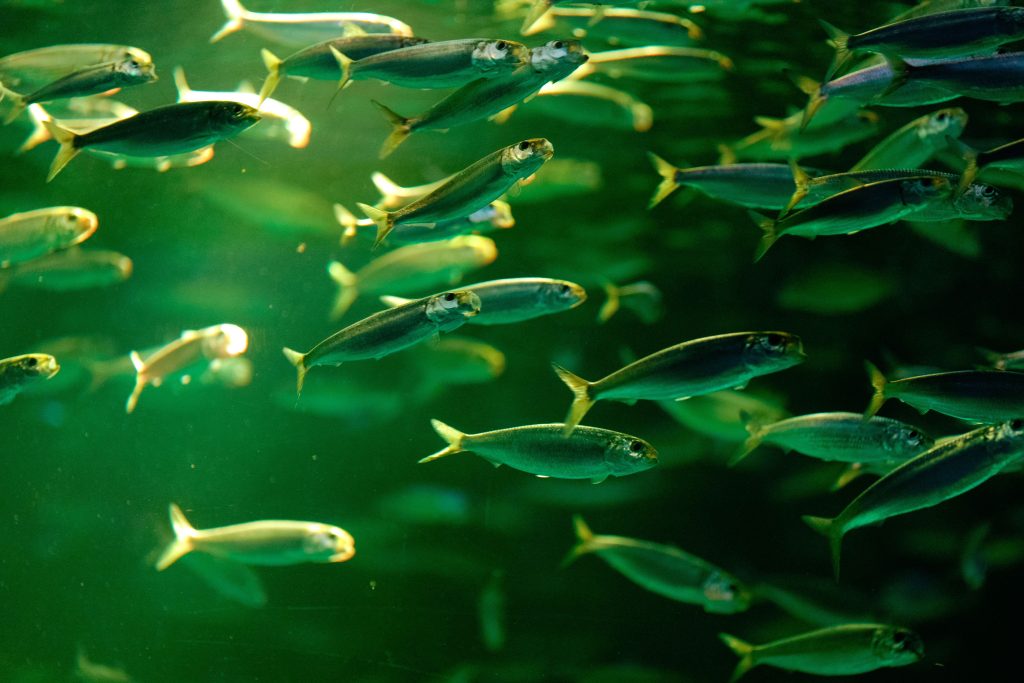
If you live anywhere along Kerala’s coastline — from Kovalam to Kasaragod — you’ve eaten it, smelled it frying in a thousand kitchens, or watched a boat unload it by the tonne. These Oil Sardine Fish Facts will change the way you look at the small silver fish sitting in your fish market basket, because behind that everyday catch is one of the most economically important, scientifically unpredictable, and culturally essential fish in Indian waters.
Most people know the oil sardine as chaala or mathi — a cheap, oily fish fried with red chilli and curry leaves, a staple on nearly every Malayali dinner table. What almost nobody realizes is that this fish single-handedly props up a fishing economy worth thousands of crores, that its population can swing by 90% or more within a single year, and that its story over the past two decades reads like a economic thriller involving monsoon failure, warming seas, and a fishery so volatile that scientists still can’t fully predict it.
This isn’t a generic “facts about sardines” listicle. This is the deep, Kerala-specific version — grounded in real landing data, real price crashes, and real consequences for the thousands of families who depend on this fish every single season. Below are 10 oil sardine fish facts that go far beyond what you’ll find in a typical marine biology textbook, and by the end, you’ll understand exactly why this “ordinary” fish deserves so much more attention than it gets.
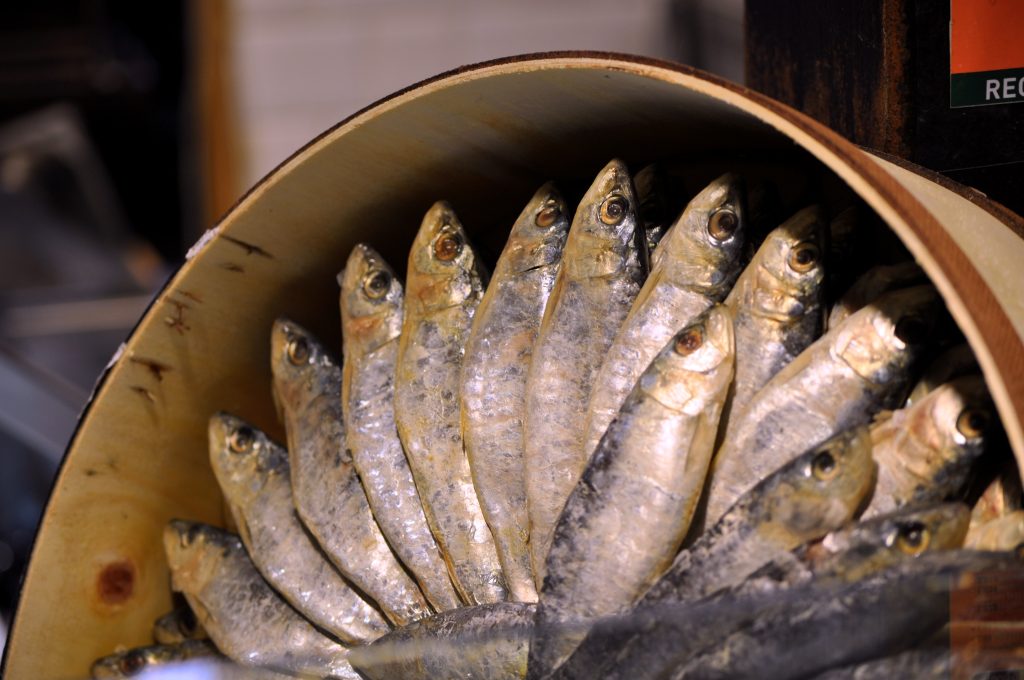
1. The Oil Sardine Isn’t Just “A Sardine” — It’s Sardinella longiceps, and Kerala Owns It
Among the roughly 20 species that fall under the commercial umbrella term “sardine,” the Indian oil sardine (Sardinella longiceps) is its own distinct species, found almost exclusively along the coasts of India, Pakistan, Sri Lanka, Myanmar, and the Gulf of Oman. Unlike the Pacific sardine or European pilchard, the oil sardine gets its name from its unusually high fat content — up to 20% oil by body weight during peak season — which is exactly what makes it so prized in Kerala kitchens and so valuable in the fishmeal industry.
Of all the states that land oil sardine, Kerala has historically dominated the catch more than any other. Even in a difficult year, oil sardine consistently ranks as the single most-landed marine species in the state, more than mackerel, more than shrimp, more than any other fish caught off Kerala’s 590-kilometre coastline — which is why any serious list of oil sardine fish facts has to start with Kerala’s outsized claim on this species.
2. In 2024, Oil Sardine Was Kerala’s Single Biggest Catch — By a Wide Margin
This is where the oil sardine fish facts get genuinely striking. According to the latest data from ICAR–Central Marine Fisheries Research Institute (CMFRI), Kerala’s marine fish catch totalled 6.10 lakh tonnes in 2024, with Indian oil sardine topping the list of most caught species in the state at 1.49 lakh tonnes — a slight increase of 7.6% over the previous year.
To put that in perspective, the next biggest species — Indian mackerel — landed only 61,490 tonnes, less than half the oil sardine haul, and it actually declined by 16% that year. No other fish comes close. When people talk about Kerala’s fishing economy, they’re really talking, in large part, about the oil sardine.
3. This Fish Can Go From Famine to Flood in a Single Year
Among all the oil sardine fish facts in this list, none illustrates the fishery’s volatility better than this one. If there’s one fact that captures just how unpredictable this species really is, it’s the wild volatility of its landings within a single calendar year. In 2024, Kerala experienced a severe scarcity of oil sardine in the first quarter, pushing prices up sharply to ₹350–400 per kilogram — a price point that put the fish out of reach for many of the very households who traditionally rely on it as an affordable protein source.
Then the picture flipped entirely. From September onwards, landings surged, exceeding one lakh tonnes in the final quarter alone, and prices collapsed to just ₹20–30 per kilogram. That’s more than a 10x price swing, driven entirely by how many fish showed up off the coast that quarter. No onion, tomato, or vegetable market in Kerala sees volatility like this. For fishing families, it means the difference between a season of real income and a season of real hardship, sometimes within the space of a few months.
4. The Southern Coast Is Struggling While the North Is Booming
Not every part of Kerala experiences the oil sardine story the same way, and this is one of the oil sardine fish facts that matters most for anyone reading landing reports by district rather than by state total. CMFRI’s 2024 data shows a clear geographic divide: southern regions from Thiruvananthapuram to Ernakulam recorded lower landings, while districts in the north such as Malappuram, Kannur, and Kasaragod showed an increase.
For coastal businesses and fishing communities operating around Thiruvananthapuram and Kovalam specifically, this matters. It means the traditional sardine-rich waters closer to the southern tip of the state are showing signs of change, while sardine shoals appear to be shifting their concentration further north — a pattern marine scientists are still working to fully explain, but one that likely connects to changing sea surface temperatures and monsoon-driven upwelling patterns along different stretches of coast.
5. Sea Surface Temperature and Monsoon Timing Decide the Fish’s Fate
This is arguably the most scientifically important of all the oil sardine fish facts covered here. Unlike farmed fish or livestock, nobody controls the oil sardine’s population. It rises and falls almost entirely on the whims of the ocean — specifically, sea surface temperature, monsoon intensity, and the strength of coastal upwelling, which brings the cold, nutrient-rich water to the surface that sardine larvae depend on to survive their first few weeks of life.
A weak or delayed monsoon can mean poor plankton blooms, which means fewer surviving juveniles, which means a smaller sardine season a year or two later. A strong, well-timed monsoon can trigger a population boom. This single biological dependency is why oil sardine landings are treated by economists and fisheries scientists as an early indicator of broader oceanic and climate shifts along India’s west coast — this small fish is, in a very real sense, a barometer for the health of the entire coastal ecosystem.
6. Cyclones Are Now a Direct Threat to the Oil Sardine Economy
Of all the oil sardine fish facts tied to climate change, this one is the newest and most urgent. Climate volatility isn’t a future risk for the oil sardine fishery — it’s already showing up in the numbers. CMFRI’s own reporting pointed directly to cyclones and heatwaves disrupting fishing across the west coast in 2024, and separately noted that a series of cyclonic storms significantly impacted fishing activities that year, keeping boats docked during periods that would normally be prime catching windows.
Add to this the finding that increased heat wave days in Andhra Pradesh and Kerala further disrupted fishing operations, and a picture emerges: the oil sardine fishery isn’t just biologically volatile, it’s now directly exposed to the same climate instability affecting agriculture and other coastal industries across India. Every extra cyclone day or heatwave day translates, fairly directly, into fewer fishing trips and fewer landings.
7. Oil Sardine Powers an Entire Second Economy You Never See
Here’s one of the more surprising oil sardine fish facts: a meaningful share of the catch never reaches a dinner plate at all. Just like other sardine species around the world, oil sardine that isn’t sold fresh is processed into fishmeal and fish oil — inputs that feed into poultry feed, aquaculture feed for farmed shrimp and fish, and industrial fish oil supplements.
This creates a strange economic double life for the fish. On one hand, it’s the affordable protein staple of Kerala’s coastal households. On the other, it’s an industrial commodity traded in bulk, with its price swinging based on both local consumer demand and international demand for fishmeal from aquaculture operations across Asia. When you understand this, the ₹350 to ₹30 per kilogram price swing from earlier makes even more sense — the fish is being pulled between two very different markets at once.
8. Kerala’s Oil Sardine Story Mirrors — and Predates — the Pacific Sardine Collapse
Long before California’s Pacific sardine fishery became a textbook case of fisheries collapse, Kerala’s oil sardine fishery had already written its own version of these oil sardine fish facts through repeated boom and bust, repeatedly, across the 20th and 21st centuries. Kerala fishing communities have lived through multiple sardine “off years” where the shoals simply didn’t appear in expected numbers, followed by unexpected bumper years that flooded local markets.
The parallel to Monterey’s Cannery Row is almost eerie: an entire regional economy built around a single small pelagic fish, vulnerable to the same combination of overfishing pressure and natural, climate-driven population swings. The difference is that Kerala’s oil sardine fishery has never fully collapsed the way California’s did in the late 1930s — but fisheries scientists at CMFRI have repeatedly flagged the same warning signs: rising fishing effort, warming coastal waters, and increasingly erratic monsoon patterns, all converging on a species that simply cannot be domesticated or farmed at scale.
9. This Fish Feeds More Than Just Humans
Just as forage fish do everywhere else in the world, Kerala’s oil sardine sits near the bottom of the food chain and supports an enormous web of marine life above it — larger predatory fish, seabirds, and marine mammals that pass through Kerala’s coastal waters. When oil sardine numbers crash in a given season, it isn’t just fishing families who feel it; the entire nearshore food web along Kerala’s coast shifts in response, with predator species forced to travel further or shift their diet to compensate.
This is one of the least-discussed oil sardine fish facts, but it’s arguably the most important one ecologically: this fish isn’t just an economic resource, it’s structural to how the entire Arabian Sea coastal ecosystem off Kerala functions. Remove or deplete it, and the effects ripple outward in ways that are difficult to reverse.
10. Nobody Can Fully Predict the Next Oil Sardine Season — And That’s the Real Story
Perhaps the single most important of all the oil sardine fish facts here is also the most humbling one: despite decades of CMFRI research, sophisticated landing-data collection covering roughly 2.5 lakh fishing trips a year, and increasingly advanced oceanographic modelling, nobody can reliably predict from one year to the next whether Kerala’s oil sardine season will be a bumper year or a bust. The 2024 season itself is proof — a catastrophic first quarter followed by a record-breaking final quarter, within the same twelve months.
For an industry, a cuisine, and a coastal culture built so heavily around one small, oily fish, that uncertainty is the defining fact of all. Every net that goes into the water off Kovalam, Kollam, or Kannur is still, in a very real sense, a gamble with the ocean.
11. Kerala’s 52-Day Trawling Ban Exists Largely Because of Fish Like the Oil Sardine
Every year, typically from mid-June to the end of July, Kerala enforces a mandatory trawling ban along its entire coastline during the peak monsoon season. While the ban covers all marine fishing, its underlying logic is built almost entirely around species like the oil sardine and mackerel — both of which spawn heavily during the monsoon months when nutrient-rich upwelling peaks along the coast.
The idea is simple: give the fish a window to breed undisturbed by mechanised trawlers, so that juvenile oil sardine populations get a chance to mature before the next fishing season opens. Traditional, non-motorised country boats are usually exempt, which is part of why small-scale coastal fishing communities are often the first to report an oil sardine season’s early signs — good or bad — well before the mechanised fleet returns to open water in August.
Without this annual pause, fisheries scientists argue the oil sardine population would face even sharper crashes than it already does. It’s one of the more overlooked oil sardine fish facts: much of Kerala’s fisheries policy over the past several decades has been shaped directly around protecting this one species’ breeding cycle.
12. The Oil Sardine Has Its Own Documented Boom-and-Bust History Going Back Nearly a Century
Kerala’s relationship with oil sardine volatility isn’t a recent phenomenon, and this is one of the oil sardine fish facts that puts the current decade in proper historical context. Fisheries records dating back to the early-to-mid 20th century already show sharp year-to-year swings in landings along the Malabar and Travancore coasts, long before modern mechanised trawling existed. Oral histories from fishing communities around Kollam, Alappuzha, and Kozhikode describe entire generations recalling both spectacular sardine seasons — when boats returned so full that surplus catch was sold for a fraction of its usual price or used directly as manure for coconut farms — and years so barren that families had to shift temporarily to other fish species or other work entirely.
What’s changed in recent decades isn’t the existence of this volatility, but its intensity and unpredictability. Fisheries researchers at CMFRI have noted that traditional seasonal patterns — where oil sardine landings could be roughly anticipated based on monsoon timing — have become harder to forecast as sea surface temperatures shift and monsoon onset dates grow less consistent year to year. The fish hasn’t changed. The ocean around it has.
13. Oil Sardine Is One of Kerala’s Most Nutritionally Valuable Everyday Foods
Beyond the economics, there’s a genuinely important nutrition story buried in these oil sardine fish facts. Because of its naturally high oil content, the oil sardine is one of the richest easily accessible sources of omega-3 fatty acids available in Kerala’s markets — comparable, gram for gram, to far more expensive imported fish. It’s also a strong source of vitamin D, vitamin B12, calcium (especially when the bones are consumed, as they often are in traditional preparations), and selenium.
For a state where oil sardine has historically been one of the most affordable proteins available to coastal and even inland households, this matters well beyond nutrition science. In years when oil sardine landings crash and prices spike toward ₹350–400 per kilogram, it isn’t just a market inconvenience — it represents a real, measurable loss of affordable nutrition access for lower-income households who have relied on this fish as a dietary staple for generations. Public health researchers in Kerala have occasionally flagged this connection between sardine season volatility and household nutrition security, particularly in coastal fishing districts where alternative protein sources are limited or costlier.
14. From Meen Curry to Mathi Peera, the Oil Sardine Shaped Kerala’s Food Culture
Not every entry on a list of oil sardine fish facts has to be about tonnage or temperature — some are simply about the plate. It’s difficult to overstate how deeply the oil sardine is woven into Kerala’s culinary identity. Mathi curry, made with kudampuli (Malabar tamarind), coconut oil, and curry leaves, is a near-universal household staple across coastal districts. Mathi peera, a coconut-crusted preparation, and simple mathi fry — shallow-fried with red chilli and turmeric — appear on lunch tables from Kovalam to Kannur with a regularity few other ingredients can match.
This culinary centrality is itself a consequence of the fish’s abundance and affordability over generations. Unlike prawns, pomfret, or seer fish — which have always carried a premium price tag — oil sardine has traditionally been priced within reach of nearly every household, which is precisely why entire regional cuisines built themselves around it. When landings crash and prices spike, the ripple effect isn’t just economic; it disrupts a food culture that has depended on this fish being cheap and plentiful for longer than most other coastal traditions.
15. Buying Oil Sardine at the Right Time of Year Makes a Real Difference
This is one of the more practical oil sardine fish facts on this list. For anyone actually shopping for oil sardine in Kerala’s local markets, understanding its seasonal volatility isn’t just trivia — it’s practical. Based on recent landing patterns, the final quarter of the year (typically September through December) tends to see the strongest landings and lowest prices, while the first quarter (January through March) has recently been the most prone to scarcity and price spikes. Buying and even freezing oil sardine during a strong landing quarter, rather than waiting until a lean period, can meaningfully reduce household food costs given how dramatically prices have swung in recent seasons.
For small businesses, restaurants, and hospitality operators along Kerala’s coast — including dive centres, resorts, and water sports operators that source local seafood for guest dining — this seasonal awareness can directly affect menu planning and cost management, particularly during years when the first-quarter scarcity coincides with peak tourist season.
16. Scientists Are Now Watching the Oil Sardine as a Climate Indicator, Not Just a Fishery
In recent years, the oil sardine has taken on a role well beyond its economic and culinary importance: fisheries scientists increasingly treat its landing patterns as a proxy indicator for broader changes happening in the Arabian Sea. Because oil sardine reproduction is so tightly linked to sea surface temperature and monsoon-driven upwelling, sustained shifts in its population — rather than single bad seasons — can signal longer-term changes in ocean temperature, oxygen levels, and current patterns along India’s west coast.
This is one of the more forward-looking oil sardine fish facts, and one that’s easy to miss amid the everyday economics of the fishery. When CMFRI researchers track a multi-year trend in oil sardine distribution — such as the recent shift of stronger landings toward Kerala’s northern districts and weaker landings in the south — they’re not just documenting a fishery statistic. They’re documenting a live signal of how climate change is physically reshaping the coastal waters that millions of people along this coastline depend on, for food, for income, and increasingly, for early warning about what’s coming next.
17. Coastal Tourism and Hospitality Businesses Have a Stake in This Story Too
This final entry rounds out our oil sardine fish facts with an angle closer to home for coastal businesses. While the oil sardine story is usually told through the lens of fishing families and market prices, it increasingly matters to Kerala’s broader coastal economy — including tourism, hospitality, and water sports businesses that operate along the same coastline where this fishery rises and falls each season. Restaurants, resorts, and dive operators sourcing local seafood for guests are directly exposed to the same price swings described earlier, and increasingly, coastal businesses are finding value in understanding these patterns rather than being caught off guard by them.
There’s also a quieter cultural dimension here. For destinations like Kovalam, where the sea itself is the core attraction — whether for diving, parasailing, or simply the coastal lifestyle — the story of the oil sardine is part of the deeper narrative of what makes this coastline distinctive: a place where the ocean’s unpredictability isn’t just a backdrop, but something the entire local economy, from fishing boats to dive boats, has learned to work alongside rather than against.
Why These Oil Sardine Fish Facts Matter Beyond the Dinner Table
It’s easy to see a plate of fried mathi and think nothing more of it. But as these oil sardine fish facts make clear, that plate represents a fishery worth lakhs of tonnes annually, a livelihood for tens of thousands of coastal families, a barometer for climate and ocean health along India’s west coast, and an ecological keystone for everything from seabirds to larger predatory fish.
Kerala’s relationship with the oil sardine is centuries old, but the pressures on that relationship — warming seas, shifting monsoons, more frequent cyclones, and rising fishing effort — are entirely modern. Understanding these oil sardine fish facts isn’t just trivia for a coastal state; it’s a window into how climate change is already reshaping one of India’s most important regional food economies, one unpredictable season at a time.
What makes the oil sardine such a compelling subject, in the end, isn’t any single statistic — it’s how many different stories converge on this one small fish at once. It’s a nutrition story, told through the affordable omega-3s it has provided to generations of coastal households. It’s an economic story, told through lakh-tonne landings and ten-fold price swings within a single year. It’s a climate story, told through shifting monsoon patterns and warming coastal waters that scientists now read like a weather forecast. And it’s a cultural story, told through mathi curry recipes passed down through families who never had to think twice about whether sardine would be on the table that week — until, in difficult years, they did.
Few fish anywhere in the world carry that much weight while asking for so little recognition. But reading about the oil sardine’s world is one thing — actually seeing it is another. The same Arabian Sea that carries these vast, silver shoals along Kerala’s coastline is the one you can explore firsthand at Bond Safari Kovalam. Strap on a tank and go scuba diving to watch schools of fish move through their natural habitat up close, glide across the surface on a kayaking trip along Kovalam’s coastline, or slip on a mask for snorkelling in the shallows where marine life gathers just beneath the waves. Add in parasailing, mermaiding, and a full lineup of other water adventure sports, and Bond Safari Kovalam turns everything you’ve just read about into something you can experience yourself, out on the water.
The next time a basket of gleaming, silver-blue oil sardine catches your eye at a Kerala fish market, remember: that fish represents an entire coastal economy balancing on the unpredictable rhythms of the monsoon, the temperature of the Arabian Sea, and decades of hard-won fisheries science still working to understand a species that, even now, refuses to be fully predicted. And the best way to understand that world isn’t just to read about it — it’s to dive into it by booking your scuba diving, kayaking, snorkelling, or parasailing session with Bond Safari Kovalam!
Frequently Asked Questions About Oil Sardine Fish
What is the difference between oil sardine and regular sardine? Oil sardine (Sardinella longiceps) is a specific species found mainly in the Indian Ocean region, distinguished by its notably high fat content — up to 20% of body weight in peak season. “Sardine” as a general term covers roughly 20 different species worldwide, including the Pacific sardine, European pilchard, and South American pilchard, each biologically distinct despite the shared common name.
Why does oil sardine price fluctuate so much in Kerala? Because landings themselves fluctuate dramatically from quarter to quarter and year to year, driven by sea surface temperature, monsoon strength, and coastal upwelling patterns that determine how many young sardines survive. A scarce quarter can push prices above ₹350 per kilogram, while a bumper quarter can push the same fish down to ₹20–30 per kilogram.
Is oil sardine good to eat? Yes. Like most sardine species, oil sardine is low in mercury because of its short lifespan and plankton-based diet, while being rich in omega-3 fatty acids, vitamin D, calcium, and B12 — making it one of the more nutritionally valuable fish regularly available at affordable prices in Kerala’s coastal markets, when the season allows.
Which part of Kerala catches the most oil sardine? Landing patterns shift year to year, but recent data shows northern districts such as Malappuram, Kannur, and Kasaragod trending upward, while southern districts from Thiruvananthapuram to Ernakulam have recorded declines — a shift researchers are still studying in relation to changing coastal water temperatures.
Can oil sardine populations collapse the way the Pacific sardine fishery did? It’s a real risk that CMFRI scientists monitor closely. While Kerala’s oil sardine fishery hasn’t experienced a collapse on the scale of California’s historic crash, the same underlying pressures — overfishing effort, warming waters, and unpredictable monsoon-driven reproduction — are present here too, which is why consistent, science-based monitoring of the fishery remains critical.
Why is there a fishing ban in Kerala every monsoon season? Kerala enforces an annual trawling ban, typically running from mid-June to the end of July, timed specifically to protect spawning periods for species like oil sardine and mackerel. The ban allows juvenile populations a window to mature before mechanised fishing resumes, and is widely credited by fisheries scientists as one of the key tools preventing sharper, more permanent declines in the oil sardine population.
What is the best time of year to buy oil sardine in Kerala? Based on recent landing trends, the final quarter of the year — roughly September through December — tends to bring the strongest oil sardine landings and the most affordable prices, while the first quarter (January to March) has recently shown a higher risk of scarcity and price spikes. Timing purchases around the stronger landing months can meaningfully reduce household seafood costs.
How does oil sardine compare nutritionally to other fish available in Kerala? Because of its high natural oil content, oil sardine delivers a concentration of omega-3 fatty acids comparable to far more expensive imported fish, alongside strong levels of vitamin D, vitamin B12, calcium, and selenium — making it one of the most nutritionally efficient, affordable protein sources traditionally available in Kerala’s coastal and inland markets alike.