
Most people book a dive to see corals, turtles and big fish. Very few know that the most important habitat in the ocean looks like an underwater lawn.
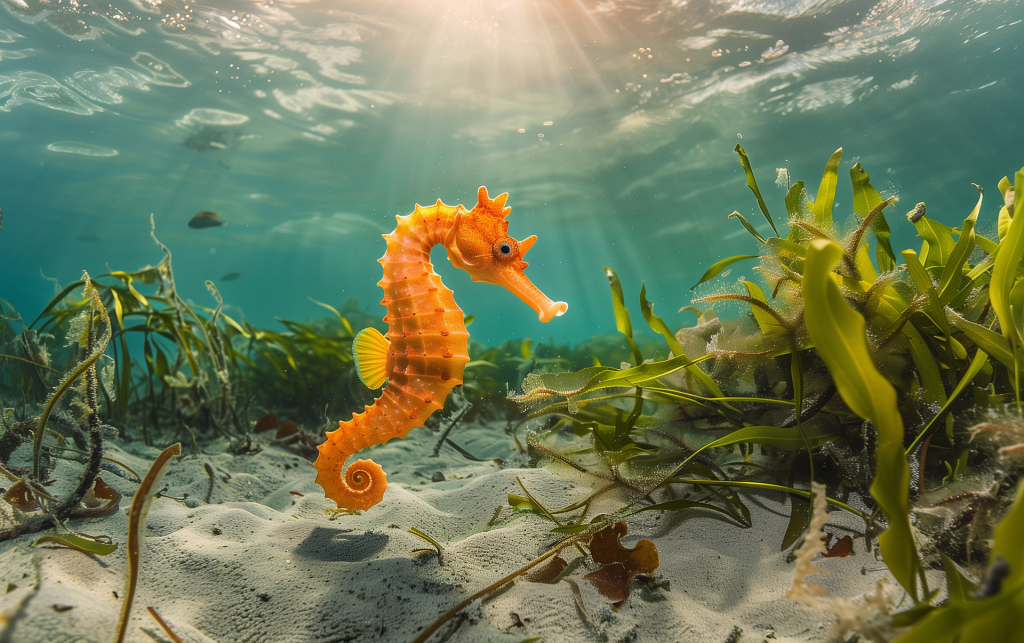
Seagrass scuba diving is the quiet, wonder-filled side of the sport. You drift over swaying green meadows, and every blade hides a story. Baby fish, seahorses, cuttlefish and grazing turtles all live in these meadows.
Here is the twist: seagrass is not seaweed. It is a true flowering plant that grows, blooms and pollinates entirely underwater. It also fights climate change harder than most forests on land.
If you have ever searched for Scuba diving in Kovalam, this guide is for you. You will get seven jaw-dropping seagrass facts, learn why this ecosystem matters to India’s coast, and see how a dive with the team at Bond Safari Kovalam turns a beach holiday into a lesson in how the ocean works.
Ready to see the sea differently? Let’s go under.
What Is Seagrass? The Plant Behind Every Great Seagrass Scuba Diving Trip
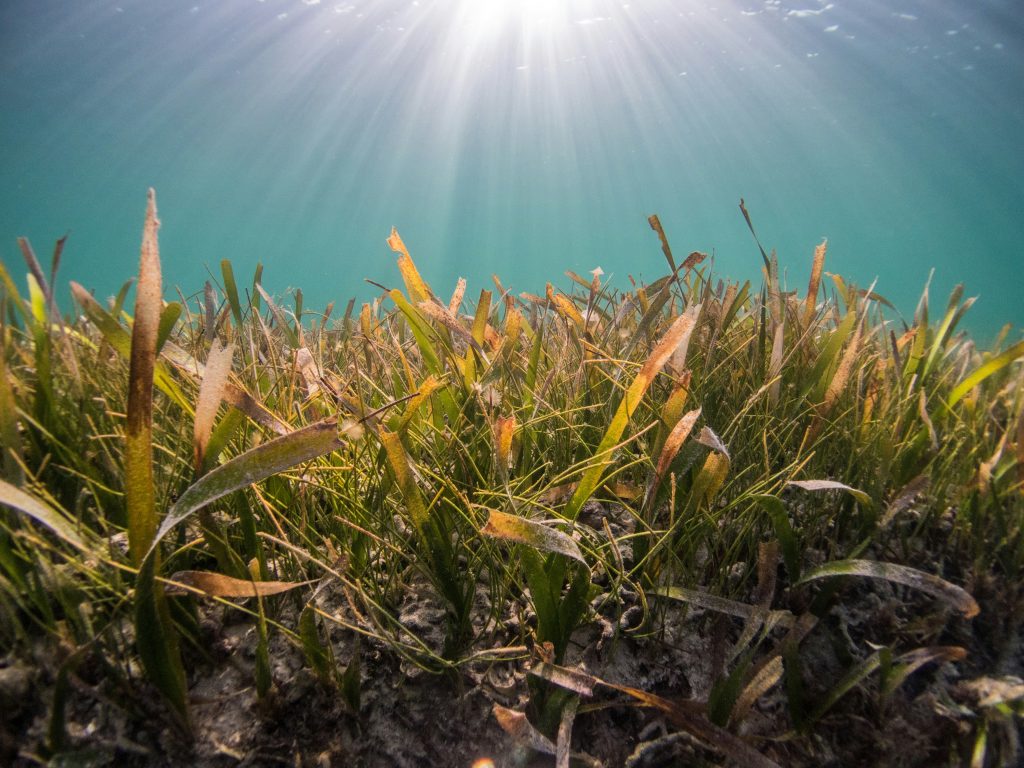
Seagrasses are marine flowering plants, called angiosperms. They have roots, stems, leaves, flowers and seeds, just like the plants in your garden.
There are around 70 known species worldwide. They grow in shallow, sunlit coastal waters on every continent except Antarctica.
Seaweed is different. Seaweed is algae. It has no true roots and no flowers. It simply clings to rocks.
Seagrass, on the other hand, anchors itself into sand and mud with a network of roots and underground stems called rhizomes. Those rhizomes spread sideways and form dense meadows. That is why a seagrass bed looks like a green carpet from the surface.
For anyone planning seagrass scuba diving, this distinction matters. Seagrass beds are living, breathing communities. When you dive over them, you are floating above a forest in miniature.
Scientists often call seagrass meadows “the lungs of the sea.” They pump out oxygen during the day and feed an enormous web of life.
Secret #1: Seagrass Is a Land Plant That Moved Back to the Ocean
This is the first fact that stops people mid-sentence.
Roughly 100 million years ago, a group of land plants did something unthinkable. They walked back into the sea. Over time they adapted to salt water, learned to pollinate underwater and spread across the world’s shallow coasts.
That makes seagrass one of the rare plants that left the land and returned to the ocean.
Think about what that means for a diver. When you glide over a meadow, you are looking at a plant family that survived dinosaurs, ice ages and mass extinctions.
Even more amazing, seagrass can flower and pollinate underwater. Some species release pollen in long, sticky strands that drift with the current until they find another flower. No bees. No wind. Just water.
Seagrass scuba diving gives you a rare front-row seat to this hidden evolution story.
Secret #2: Seagrass Stores Carbon Faster Than a Rainforest
Seagrass covers less than 0.2% of the world’s seafloor. Yet it is a carbon superhero.
According to the United Nations Environment Programme, seagrass meadows can capture carbon up to 35 times faster than tropical rainforests. You can explore their work on blue carbon at UNEP.
Here is how it works:
- Seagrass absorbs carbon dioxide while it grows.
- Dead leaves and roots get buried in oxygen-poor sediment.
- The carbon stays locked in the seabed for centuries, sometimes millennia.
Scientists call this “blue carbon.” Seagrass meadows store a huge share of the carbon buried in ocean sediments, far beyond what their small footprint suggests.
So when you enjoy seagrass scuba diving, you are not just sightseeing. You are visiting one of the planet’s most powerful climate defenders.
Secret #3: The World’s Largest and Oldest Plants Are Seagrasses
Forget redwoods. Some of the biggest living things on Earth grow underwater.
In Shark Bay, Western Australia, researchers found a single seagrass meadow of Posidonia australis covering about 180 square kilometres. Genetic studies showed it is one individual plant that has been spreading for roughly 4,500 years. It is widely described as the largest known plant on Earth.
Off the coast of Ibiza and Formentera in the Mediterranean, a Neptune grass (Posidonia oceanica) meadow stretches about 8 kilometres. Scientists estimate that some clones could be up to 100,000 years old.
Let that sink in. A plant that began growing before modern humans left Africa is still alive today.
Seagrass scuba diving lets you glide over these ancient living giants. Even a small meadow is the result of patient growth over many years.
Secret #4: Seagrass Meadows Are the Ocean’s Nursery
Ask any marine biologist where baby fish hide, and the answer is almost always the same: seagrass.
The dense blades create a safe maze. Predators struggle to hunt inside it. Young fish, prawns, crabs and squid feed on tiny organisms living on the leaves.
According to Project Seagrass, a single hectare of healthy meadow can support tens of thousands of fish and millions of small invertebrates. Research also suggests that around 20% of the world’s 25 largest fisheries rely on seagrass nurseries.
That includes the fish that end up on dinner plates in coastal communities. Fishing families in Kerala depend on healthy coastal habitats too. When nurseries thrive, the catch thrives.
On a seagrass scuba diving trip, look closely at the blades. You may spot:
- Juvenile fish darting between leaves
- Seahorses and pipefish holding on with curled tails
- Cuttlefish changing colour in seconds
- Sea cucumbers and starfish crawling across the sand
- Rays resting on the meadow floor
Every one of those animals needs the meadow to survive.
Secret #5: Seagrass Feeds Dugongs and Green Turtles
Dugongs are known as sea cows. They are gentle marine mammals, and they eat almost nothing but seagrass. An adult can graze through a huge amount in a single day, leaving behind visible feeding trails across the meadow.
India still has a small, fragile dugong population, found mainly around the Gulf of Mannar, Palk Bay and the Andaman and Nicobar Islands. Protecting seagrass here is directly linked to saving this species.
Green sea turtles depend on seagrass too. Adult greens graze on it like underwater cattle. Their cropping keeps the meadow healthy by encouraging fresh, nutritious growth.
If turtles fascinate you, read our deep dive on sea turtles and scuba diving. It pairs perfectly with this guide.
For every diver, the lesson is simple. No seagrass means no turtles and no dugongs. Seagrass scuba diving helps you understand that link in a way no textbook can.
Secret #6: Seagrass Cleans the Water and Protects the Coast
Here is a benefit that rarely makes the headlines.
A 2017 study published in the journal Science found that seagrass meadows can reduce bacterial pathogens in the surrounding water by up to 50%. That helps humans, fish and corals alike.
Seagrass also traps fine sediment with its leaves and holds the seabed together with its roots. This keeps water clearer and protects nearby coral reefs from being smothered in silt.
And there is more:
- Leaves slow down waves and currents.
- Roots reduce coastal erosion.
- Meadows act as a buffer during storms.
For a coastal state like Kerala, that natural protection is priceless. Every healthy meadow is a free sea wall.
Clear water also means better visibility. That is one more reason seagrass scuba diving sites often make for relaxed, beautiful dives.
Secret #7: Seagrass Is Vanishing, and Divers Can Help
Now the hard truth.
Scientists estimate that the world has lost roughly 29% of its known seagrass area since the late 1800s. Losses accelerated sharply from the 1990s onward. Pollution, dredging, boat anchors and warming seas are the biggest culprits.
The United Nations recognises 1 March as World Seagrass Day to draw attention to the crisis.
The good news is that seagrass can recover. Restoration projects around the world are replanting meadows and bringing marine life back.
Divers have a real role to play. Divers who understand the ecosystem protect it better. They avoid kicking up sediment, never touch the plants and spread the word.
That is the heart of responsible seagrass scuba diving. You enjoy the beauty, and you leave nothing behind but bubbles.
Seagrass in India: A Hidden Treasure Along Our Coastline
India has more than a dozen recorded seagrass species. They grow along the Gulf of Mannar, Palk Bay, Lakshadweep, the Andaman and Nicobar Islands, and in scattered patches along the mainland coast.
These meadows support local fisheries, shelter marine life and store carbon. Yet they get far less attention than mangroves or coral reefs.
Many Indian travellers have never heard of seagrass. That is a gap in awareness, and it is also an opportunity. Diving centres like Bond Safari can introduce visitors to the full picture of reef, sand and meadow habitats that make our seas so productive.
When you dive in Kerala, you are exploring a coastline whose health depends on connected ecosystems. Seagrass, reef, sand and open water all work together.
Why Scuba Diving Is the Best Way to Experience Seagrass
You can see seagrass from a boat or while snorkelling. But you can only truly understand it from below.
Here is why seagrass scuba diving beats every other way to explore:
1. Time. Scuba lets you stay down for a relaxed, unhurried dive. Seagrass wildlife is small and shy, so patience pays off.
2. Perspective. At eye level with the blades, you notice details you would miss from above: a tiny seahorse, a camouflaged cuttlefish, a turtle’s bite marks on the leaf tips.
3. Silence. Underwater, everything slows down. The meadow sways in the current, and your own breathing becomes the soundtrack.
4. Connection. Nothing builds respect for nature faster than seeing it up close.
It is the closest thing to walking through a living, breathing garden that happens to be underwater.
Seagrass Scuba Diving in Kovalam with Bond Safari
Kovalam is already one of Kerala’s most loved beach destinations. Its curved bays, lighthouse views and warm Arabian Sea waters draw travellers from across India and the world.
Beneath the surface, the coast offers far more than most visitors expect. That is where Bond Safari Kovalam comes in.
Bond Safari is a scuba diving and water sports centre in Kovalam that helps first-timers and certified divers explore the underwater world safely. The team offers:
- Discover Scuba Diving for complete beginners
- PADI Open Water Diver course for full certification
- Advanced courses for certified divers
- Water sports such as parasailing
- Experiences such as mermaiding for families and groups
Every dive is led by trained instructors who brief you before you get in the water. They explain what you may see, how to move safely and how to protect marine life.
Dive sites vary with the season, conditions and visibility, so your instructor will tell you what the day offers. Whatever the site, you can use what you have learned in this guide to read the underwater world like a naturalist: look at the sand, the reef edges and any green patches where small creatures hide.
Ready to try it? Book your scuba diving experience in Kovalam or send an enquiry through the website. The team will help you pick the right dive for your experience level.
What to Expect on Your First Seagrass Scuba Diving Experience
Not sure what a first dive feels like? Here is the typical flow.
Step 1: Arrival and briefing. You meet your instructor, fill in a short medical form and learn the basic hand signals.
Step 2: Gear fitting. You get a mask, fins, wetsuit and a scuba system. The team checks everything with you.
Step 3: Shallow-water practice. You breathe underwater, clear your mask and practise staying calm in a controlled area.
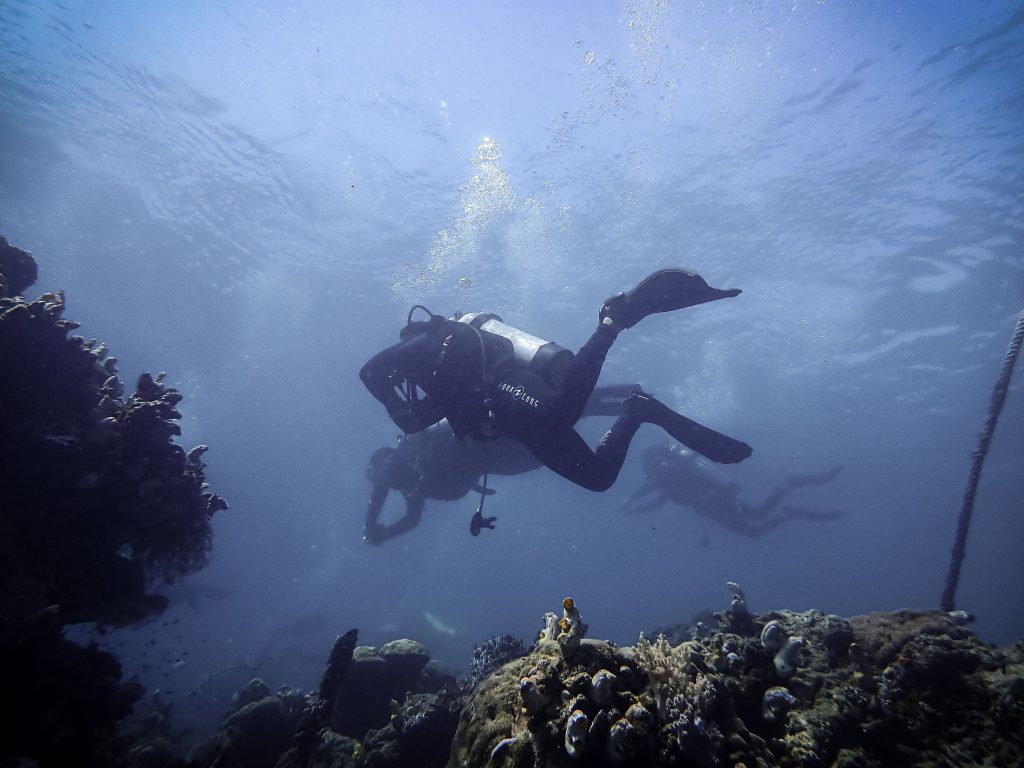
Step 4: The open-water dive. Your instructor stays close the entire time. You glide slowly, breathe deeply and look around.
Step 5: Surface and debrief. You share what you saw, and the instructor answers your questions.
Most people say the same thing afterwards: “I didn’t expect it to feel so peaceful.”
You do not need to be a strong swimmer or a fitness expert. You just need curiosity and a willingness to follow your instructor.
How to Practise Responsible Seagrass Scuba Diving
Seagrass is delicate. Roots grow slowly, and damaged patches can take years to recover. A few habits make a big difference.
Master your buoyancy. Hovering above the meadow keeps your body off the plants. Poor buoyancy is the number one cause of diver damage. The PADI Peak Performance Buoyancy specialty is a great upgrade after your Open Water course.
Fin with care. Use gentle, controlled kicks. Fast kicks stir up sand and bury the blades under sediment. Many divers prefer the frog kick over meadows because it pushes water backward, away from the bottom.
Never touch or stand on seagrass. Look closely, but keep your hands to yourself.
Do not chase wildlife. Let seahorses and turtles move on their own terms.
Take only photos. Leave shells, plants and animals where you found them.
Protect the shoreline. Use reef-safe sunscreen and avoid single-use plastics. Nutrient and plastic pollution harm seagrass health.
These small choices turn seagrass scuba diving into a form of conservation.
Who Can Try Seagrass Scuba Diving?
Almost anyone in reasonable health can try it. Here is a quick guide:
- Beginners: Start with a Discover Scuba Diving session. No certification is needed.
- Families and teens: Many programmes welcome younger divers with age-appropriate limits.
- Couples and friends: A shared dive makes a memorable travel experience.
- Certified divers: Join a guided dive and hone your naturalist skills.
- Aspiring professionals: Start your PADI journey and build a career in diving. Bond Safari has helped students go on to become instructors abroad.
Everyone completes a simple medical questionnaire first. If you have a health concern, tell the team in advance so they can guide you properly.
Best Time and Practical Tips for Scuba Diving in Kovalam
Diving conditions on India’s west coast improve after the monsoon. The calmer season generally runs from around October through May, with the clearest, most comfortable days often in the cooler months.
Here are a few quick tips:
- Book early during peak holiday and festival weeks.
- Eat a light meal before diving.
- Stay hydrated, and avoid alcohol the night before.
- Wear a swimsuit under your clothes and carry a towel.
- Bring a waterproof phone pouch, or ask about photo options.
- Do not fly within the recommended window after diving.
- Listen carefully during the briefing and ask questions.
For current schedules and slots, check with the team directly through the Bond Safari website.
Frequently Asked Questions About Seagrass Scuba Diving
Is seagrass the same as seaweed?
No. Seagrass is a flowering plant with true roots, stems and leaves. Seaweed is algae.
Can beginners try seagrass scuba diving in Kovalam?
Yes. A Discover Scuba Diving session is designed for first-timers, and no previous experience is required.
Do I need to know how to swim?
Basic comfort in water helps, and your instructor will guide you through everything. For full certification courses, a simple swim test is part of the programme.
Is seagrass scuba diving safe?
Scuba diving with trained professionals, proper equipment and a thorough briefing is a safe activity when guidelines are followed.
What marine life can I see around seagrass?
Seagrass habitats commonly shelter juvenile fish, seahorses, cuttlefish, rays, crabs and grazing turtles. What you see depends on the site and the day.
How do I book a dive with Bond Safari?
Visit the Bond Safari Kovalam website and send an enquiry, or use the booking page to pick your experience.
Final Thoughts: Dive In and See the Ocean’s Hidden Meadows
Seagrass may not be the loudest star of the ocean, but it holds the whole show together. It feeds turtles and dugongs, nurtures baby fish, cleans the water, protects the shore and locks away carbon for centuries.
Seagrass scuba diving turns that knowledge into something you can feel. One quiet glide over a green meadow changes how you look at the sea.
Kovalam is waiting, and so is a team that loves introducing people to the underwater world.
Don’t just read about the ocean. Dive into it. Book your scuba diving experience with Bond Safari Kovalam today and discover what lives beneath the waves.