It’s 11:47 on a Sunday night. Your laptop glows with a spreadsheet you’ll present tomorrow, and your phone shows a video of someone drifting past a sea turtle in turquoise water. Your chest tightens. Not with excitement, but with a quiet, familiar question: Is this it?
If that scene feels uncomfortably close to home, you are exactly who this guide is for.
A scuba diving career India offers is no longer a fantasy reserved for backpackers who “never grew up.” Thousands of Indians have walked out of offices in Bengaluru, Mumbai, Delhi, and Pune and walked into wetsuits. Some regretted it. Most didn’t. The difference between the two groups was almost never courage. It was planning.
So this is not a “quit tomorrow and find yourself” pep talk. It’s a realistic, number-aware, step-by-step guide to building a scuba diving career India can actually support, from your first breath underwater to your first paycheck as a dive professional.
Grab your chai. Some of what follows will thrill you. Some of it will sober you up. Both are useful.
Ready to start your scuba diving career India journey with a trusted name? Bond Safari Academy, certified by PADI, trains beginners and aspiring professionals at Bond Safari Kovalam. Keep reading to see how each step of this guide can happen under one roof.
Why a Scuba Diving Career India Is Suddenly Possible
Ten years ago, if you told your family you wanted to teach diving for a living, you’d have been met with silence, then a lecture. Today the conversation is different, and there are real reasons why.
Indian dive tourism is growing. Coastal India is welcoming more divers every year, and destinations like Kovalam are drawing first-timers who want to learn properly. Every dive operation needs instructors, divemasters, boat crew, and guides.
Domestic travelers are changing. A new generation of Indian travelers wants experiences, not just sightseeing. “Learn to dive” has become a bucket-list item for engineers, doctors, designers, and software professionals. Demand for trained, friendly, professional instructors, especially ones who speak Hindi, Tamil, Bengali, or Kannada along with English, keeps rising.
Your passport is more powerful than you think. A professional dive certification is internationally recognized. Once you’re a certified instructor, you can work in Thailand, the Maldives, Egypt, the Philippines, Indonesia, and beyond. A scuba diving career India starts at home, but it doesn’t have to end there.
Your corporate skills are an unfair advantage. This surprises people. The ex-banker who can manage bookings, the ex-marketer who can build a dive shop’s Instagram, the ex-HR professional who handles nervous first-timers with patience: these people stand out. Dive centers are small businesses, and small businesses are desperate for people who also understand business.
Put those four forces together and you get a window of opportunity. Windows don’t stay open forever.
The Honest Math: What a Scuba Diving Career India Really Pays
Let’s address the awkward question first, because every parent, spouse, and friend will ask it.
“How much will you earn?”
Here is the truth, in broad strokes. Figures vary by location, season, and employer, so treat these as rough ranges and confirm with dive centers directly before planning your finances.
Entry-level dive professionals (Divemasters) in India often earn a modest monthly stipend, sometimes with free or subsidized accommodation and meals. Think of it as roughly ₹15,000 to ₹30,000 per month in many locations. It is not corporate money.
Certified instructors typically earn more, often ₹40,000 to ₹1,00,000 or more per month, depending on how many courses they teach, the operator’s pricing, and whether commissions are included. Senior instructors, course directors, and dive center managers can earn considerably above that.
Seasonality is the catch. Most Indian dive operations run heavily from roughly October to May. During the monsoon, sea conditions can shut diving down or reduce it sharply. Smart divers either work abroad during the Indian off-season or build income from other sources. Ask Bond Safari Academy about the diving calendar at Kovalam so you can plan your year.
The real wealth is lifestyle leverage. Many dive professionals live cheaply near the sea, with housing and food costs far below metro levels. Your salary may drop by half, but your expenses might drop by more.
Is a scuba diving career India offers going to make you rich? Almost certainly not. Is it going to make you broke and miserable? Not if you plan properly. For most people, the honest answer is somewhere in between: a simpler, slower, saltier life that pays enough.
Step 1: Test the Water Before You Burn the Boats
The most expensive mistake in this whole journey is quitting your job before you know whether you like diving as a daily reality, not just as a holiday.
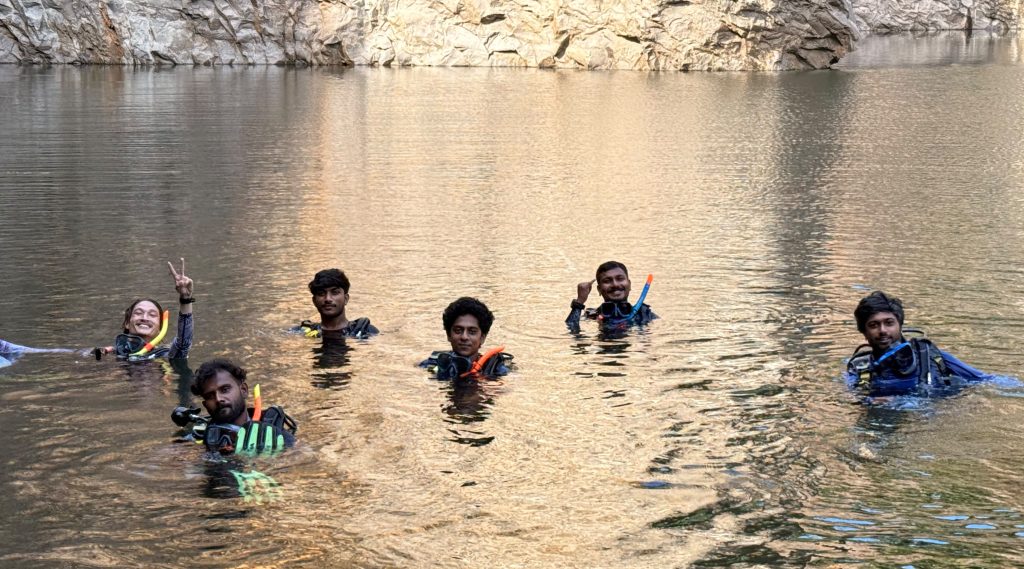
Start with a Discover Scuba Diving session. This is a short, supervised introduction in a pool or shallow sea, usually one day. Then, if you love it, enroll in an Open Water Diver course, the entry-level certification that lets you dive independently to around 18 metres with a buddy.
A few things to notice during this stage:
- How your body feels underwater. Some people feel instant peace. Others struggle with equalizing their ears or with the feeling of breathing from a regulator. Neither is a failure, but you should know early.
- How you feel about the “boring” parts. Rinsing gear. Filling tanks. Carrying weights. Answering the same safety questions for the hundredth time. A professional dive career is about 20 percent magic and 80 percent logistics.
- How you feel around beginners. If a nervous diver clinging to your arm makes you smile rather than panic, that’s a good sign. Teaching is the job.
Open Water courses in India typically cost somewhere in the range of ₹20,000 to ₹30,000, depending on the location and agency. It is the cheapest “career test” you will ever buy.
Your homework: After certifying, go diving a few more times as a regular recreational diver. If you’re still excited after ten dives, you’re onto something real.
Take Your First Breath Underwater at Bond Safari Academy
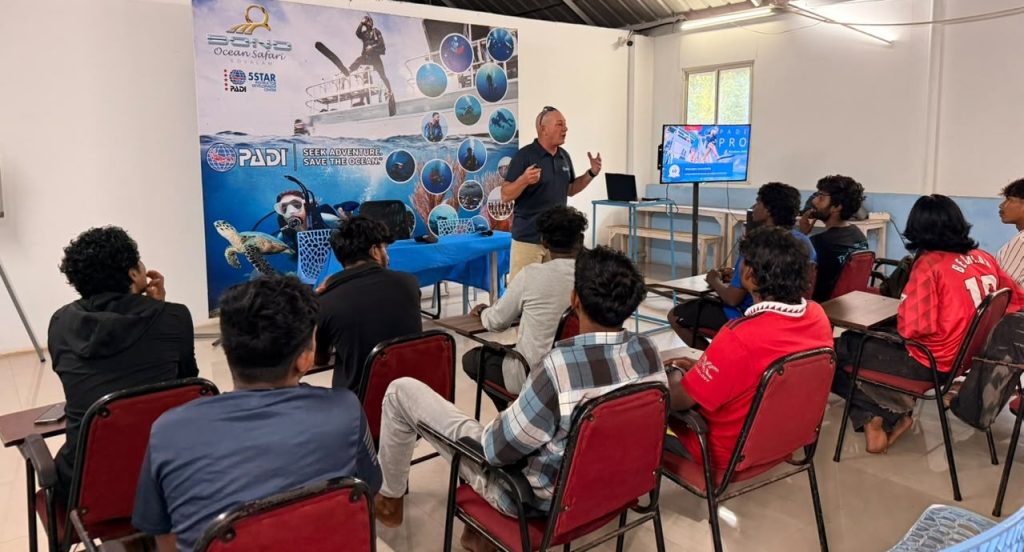
Your first dive shouldn’t happen in a rush, with a stranger, on a crowded boat. At Bond Safari Academy, PADI-certified training begins gently, with a briefing, a pool-style confidence build, and an instructor who watches you the whole time.
Whether you want a one-day Discover Scuba Diving experience or the full Open Water Diver certification, Bond Safari Kovalam is a place to begin. If you’re still checking whether a scuba diving career India offers is for you, this is the lowest-risk way to find out.
Step 2: Get Medically Cleared and Physically Ready
This step is unglamorous and absolutely non-negotiable.
Diving places real demands on your lungs, heart, ears, and sinuses. Before any course, you’ll complete a medical questionnaire. If you answer “yes” to certain conditions, you’ll need a physician’s sign-off. Later, professional-level courses typically require a fresh medical clearance from a doctor, usually valid for a limited period.
Be honest on those forms. Hiding a condition doesn’t make you tougher. It makes you a hazard to yourself and your buddy.
Beyond the medical, build functional fitness. You don’t need to look like an athlete, but a dive professional should be comfortable with:
- Swimming. Professional courses involve continuous swim tests and a timed tread.
- Carrying weight. Tanks, weight belts, and kit are heavy, and you’ll move them daily.
- Heat and sun. Long days on open boats are tiring.
- Rescue skills. Towing a tired or unresponsive diver is physically demanding.
If you’ve been chained to a chair for eight years, start swimming three to four times a week now. Your future self will thank you at the 60th dive.
Step 3: Build Your Dive Log Like Your Future Depends on It (It Does)
Here’s a fact that surprises corporate professionals: in diving, experience is currency.
To enter professional training, you’ll need a minimum number of logged dives. For example, with PADI, the Divemaster course typically requires around 40 logged dives to begin and 60 to certify. For the instructor level, around 100 logged dives are required. Other agencies like SSI have their own requirements, so always verify the current numbers directly with the agency.
Before you reach those numbers, you’ll likely progress through:
- Advanced Open Water Diver: deeper dives and specialty experiences.
- Rescue Diver: a challenging but widely loved course that teaches you to prevent and manage emergencies.
- Emergency First Response (EFR): a CPR and first-aid certification that’s typically required for professional-level training.
Many aspiring professionals use their annual leave for this stage. Spend your two weeks of holiday at Bond Safari Kovalam, chasing certifications and dive counts, instead of a generic beach resort. Treat your leave as your “dive apprenticeship fund.”
Pro tip: Don’t just chase numbers. Dive in varied conditions, such as current, low visibility, night dives, and deeper sites. A log with 60 diverse dives is worth far more than 60 identical ones in a calm lagoon.
Climb Every Level at One Academy
One advantage of training with a single, PADI-certified academy is continuity. You don’t restart with strangers at every level. At Bond Safari Academy, you can study scuba diving and its further levels, including:
- Open Water Diver: your entry-level certification.
- Advanced Open Water Diver: deeper dives and new skills.
- Rescue Diver: emergency prevention and management.
- Emergency First Response (EFR): first aid and CPR training.
- Professional levels: the path toward Divemaster and beyond.
Ask the team at Bond Safari Kovalam about current course schedules, prerequisites, and pricing, so you can plan your dive log and your budget together.
Step 4: Become a Divemaster, the Real First Rung of a Scuba Diving Career India Style
The Divemaster is the first professional-level certification. This is where the hobby becomes a job.
As a Divemaster, you can guide certified divers, assist instructors during courses, and take on a variety of responsibilities at a dive center. It’s also the point where you’ll learn what really runs a dive operation: gear maintenance, dive planning, risk management, and customer service.
In India, many aspiring pros take the Divemaster internship route. You live and work at a dive center for several weeks or months, learning on the job while completing your coursework. Costs can range widely, often around ₹1.2 lakh to ₹2.5 lakh depending on location and inclusions, so get a full written breakdown before you pay.
Here’s what to ask any dive center before committing to a Divemaster internship:
- What’s included? Course materials, certification fees, accommodation, equipment rental, and air fills.
- How many dives will I do? A good program offers real hands-on diving and assisting experience.
- Who’s teaching? Ask about the instructor’s experience and teaching style.
- What happens after? Some centers hire their best interns. Others don’t. Ask directly.
- What do former interns say? Talk to at least two people who’ve completed the program.
This phase is also where many people quietly discover whether they truly want this life. You’ll be tired. You’ll smell like neoprene. You’ll answer questions about whether sharks are dangerous. And if you still wake up excited for the 6:30 AM boat briefing, you’re built for it.
Why Train for the Pro Level With Bond Safari Academy
A PADI-certified academy gives your certificate international recognition. That matters if your scuba diving career India plans include working abroad during the monsoon.
Here is what to look for when choosing, and why Bond Safari Academy is worth a conversation:
- Recognized certification: training aligned with PADI standards.
- Safety-first culture: careful briefings, buddy checks, and supervised progression.
- A clear learning ladder: from your first dive to professional levels.
- A coastal training base: real ocean experience at Bond Safari Kovalam.
Step 5: Choose Your Base, Where Your Dive Career in India Will Actually Live
Location shapes everything: income, lifestyle, opportunities, and even your mental health. For anyone starting a scuba diving career India can truly support, the base matters more than most people expect.
Kovalam is a beginner-friendly coastal base for learning and training, and it is home to Bond Safari Academy. If you want a place where you can build your first certifications, meet people already living the dive life, and grow from your first dive to the professional levels in one place, Bond Safari Kovalam is an excellent starting point.
Here’s why a single, focused base works so well:
- Continuity. You train, log dives, and build relationships in one place instead of starting over every few months.
- Community. Learning alongside other aspiring professionals keeps you motivated on the tough days.
- Mentorship. Working under the same PADI-certified team lets them see your progress and guide your next step.
- Real ocean experience. Regular dives in the same waters make you a more confident, observant professional.
Abroad. Thailand (especially Koh Tao), the Maldives, Egypt, the Philippines, and Indonesia all have huge dive economies and constant demand for instructors. Many Indian professionals train at home and then work abroad during the monsoon.
When choosing your base, ask yourself three questions:
- Can I survive here during the off-season?
- Is there a community of professionals I can learn from?
- Do I want a quiet coastal life or a social, connected one?
The best location for a scuba diving career India offers is not the flashiest one. It’s the one where you can stay long enough to get good, and where a PADI-certified academy is ready to guide you.
Step 6: Conquer the Instructor Development Course (IDC)
If the Divemaster is the first rung, the Instructor Development Course (IDC) is the jump to a whole different ladder.
The IDC trains you to teach. You’ll study dive theory in depth, practice teaching skills, learn how to structure courses, manage students in water, and handle risk. It ends with the Instructor Examination (IE), a multi-day assessment run by the certifying agency.
Honest truths about this stage:
- It’s intense. Expect long days of theory, teaching practice, and skills drills.
- It’s expensive. IDC costs vary, but many candidates budget in the region of ₹1.5 lakh to ₹2.5 lakh or more, including exam fees and materials. Confirm the current numbers.
- It’s worth preparing for. Many candidates fail their first attempt because they underestimate the exam. Practice teaching to friends, record yourself, and drill your theory.
- The agency matters, but the instructor matters more. PADI, SSI, NAUI, and others are all respected. A passionate, experienced course director is worth more than a famous logo.
After passing, you’re a certified dive instructor. You can teach beginners and eventually add specialty instructor ratings, such as Deep, Wreck, Night, Nitrox, and Underwater Photography, each of which expands your earning potential.
Step 7: Land Your First Job and Don’t Quit Quitting Too Early
Passing the IE is a euphoric moment. It’s also the moment when the real career begins, and when many new instructors quietly panic.
Here’s how to land that first job.
Start where you trained. Dive centers often hire from their own internship pool. If you’ve worked hard and made yourself useful, you’re already ahead of strangers with identical certificates.
Apply early for the season. Hiring for the October to May season usually begins well before the monsoon ends. Contact operators in July or August.
Make yourself more than an instructor. The most employable new instructors can also handle bookings, photography, social media, customer support, or boat operations. If you came from a corporate background, advertise those skills.
Be flexible. Your first job might not be your dream location. Treat it as paid learning. Two seasons of real teaching experience will open doors that no certificate can.
Keep a financial buffer. Even with a job, expect irregular income at first. A buffer of several months of expenses makes you a calmer, better professional.
One more piece of advice: do not burn your corporate bridges. Leave on good terms, keep your network alive, and consider negotiating a sabbatical or part-time arrangement before resigning outright. The corporate world will still exist if you need to return, and having that safety net often gives people the confidence to take the leap in the first place.
The Skills Nobody Mentions About a Scuba Diving Career India Demands
Certifications get you in the door. These skills keep you employed.
Patience. You’ll repeat the same briefing hundreds of times, and each time it needs to sound fresh and calm.
Communication across languages. Indian divers come from everywhere. Being able to reassure a nervous Tamil-speaking grandmother or a Hindi-speaking family can make you the most requested instructor at your center.
Calm under pressure. When a student panics at depth, your steadiness is the safety system.
Basic mechanical sense. Regulators, compressors, and tanks need maintenance. Understanding how they work makes you more valuable and safer.
Business awareness. Dive centers operate on thin margins. People who understand bookings, pricing, and customer experience rise fast.
Content creation. Underwater photography and video are now core to the business. A dive pro who can shoot and edit short reels is often more attractive to employers than one with a slightly higher certification level.
Risks and Mistakes That Sink a Scuba Diving Career India Dreamers Often Make
Let’s be blunt about the pitfalls.
Quitting too soon. Resigning before you’ve tested the lifestyle, saved a buffer, or completed core certifications is the most common mistake.
Choosing the cheapest course. A bargain internship with poor supervision can leave you with certificates and no real skill. Safety and quality matter far more than saving a little money.
Ignoring the off-season. Many new professionals plan beautifully for the high season and then run out of money in the monsoon months.
Underestimating the physical toll. Repeated diving, heavy lifting, sun exposure, and long days can be tough on the body. Take health seriously.
Romanticizing the job. On an Instagram feed, dive life is sunsets and turtles. In real life, it’s gear washing, early mornings, and difficult customers. If you love the whole picture, you’ll thrive.
Neglecting safety culture. Diving is safe when done properly, but shortcuts kill. Never compromise on briefings, buddy checks, or emergency preparedness.
Beyond Teaching: Other Paths Inside a Scuba Diving Career India Can Offer
Not everyone wants to teach beginners for ten years, and the good news is you don’t have to.
Dive center ownership or management. After years of experience, many professionals open or run their own centers. Your corporate skills in operations, marketing, and finance suddenly become powerful assets.
Underwater photography and videography. Skilled underwater creators can earn through tourism clients, brands, and their own content channels.
Marine conservation and research. NGOs and research groups often need divers for reef surveys, species monitoring, and clean-up drives.
Technical and freediving instruction. Advanced pathways like technical diving or freediving open higher-skill, often higher-paying niches.
Dive travel and expedition leading. Guiding group trips to international destinations blends travel, teaching, and storytelling.
Equipment sales and service. Gear retail, repair, and rental can be profitable, especially in growing markets.
Commercial diving. This is a distinct field that involves underwater construction, inspection, and offshore industry work. It requires different training and carries different risks and rewards, so research it separately from recreational diving.
A scuba diving career India offers can branch in many directions. The ocean, it turns out, has many doors.
Your Financial Runway: How to Quit Your Job Without Panicking
Here is a practical way to think about the money.
Step one: calculate your real monthly expenses. Not your current lifestyle, but the stripped-down version you’d live on near the sea.
Step two: build a runway. Many people aim for at least six to twelve months of living expenses plus the full cost of training. This might sound huge, but it’s the single biggest factor in staying calm.
Step three: use the “slow transition” method. Do your Open Water, Advanced, and Rescue courses during leave. Save aggressively for a year. Then do the Divemaster course. Then decide whether to quit.
Step four: keep income streams alive. Freelance work, remote consulting, or content creation can bridge the off-season. Plenty of dive professionals blend part-time remote work with teaching.
Step five: set a “return rule.” Decide in advance what would make you go back to corporate life, for example if your savings drop below a certain number. Having a clear rule removes shame and panic from the decision.
This isn’t pessimism. It’s the planning that separates a successful scuba diving career India supports from an expensive gap year.
Your Scuba Diving Career India Starts at Bond Safari Kovalam
Reading about diving only takes you so far. At some point, you have to get wet.
Bond Safari Academy, certified by PADI, is built for people exactly like you: curious, a little nervous, and ready for a different kind of life. Whether you’re a complete beginner or planning your path to the professional levels, the team at Bond Safari Kovalam can guide you through each stage.
Here’s your next move:
- Contact Bond Safari Academy and ask about the course that fits you.
- Book your first session at Bond Safari Kovalam.
- Start your dive log.
Frequently Asked Questions About a Scuba Diving Career India
Where can I learn scuba diving with PADI certification?
You can train at Bond Safari Academy, a PADI-certified academy, at Bond Safari Kovalam. You can begin with an introductory dive or a full certification course and move up through the other levels.
Can I become a dive instructor in India without a science background?
Yes. Dive training is accessible to people from any academic or professional background. What matters is your comfort in the water, willingness to learn, and attitude toward safety.
Am I too old to start?
Many people begin in their late twenties, thirties, and even forties. Fitness and passion matter far more than age, and mature instructors are often valued for their patience and life experience.
Do I need to be a strong swimmer?
You need to be comfortable in the water and meet the swim requirements of your courses. You don’t need to be an athlete, but you should be able to swim confidently.
Which certification agency is best?
PADI, SSI, NAUI, and others are all recognized internationally. PADI is the largest and most widely recognized, but your choice of instructor and dive center often matters more than the logo on your card.
Can women build a scuba diving career in India?
Absolutely. Women are increasingly visible as instructors and dive center owners, and many divers specifically look for female instructors.
Is it safe?
Diving is statistically safe when done with proper training, equipment, and procedures. Safety depends heavily on discipline, so choose professional operators who prioritize it.
How long does the whole journey take?
From Open Water to Instructor, many people take anywhere from a few months to two years, depending on how intensively they train and how quickly they log dives.
Final Thoughts: Is a Scuba Diving Career India Style Right for You?
Let’s return to that Sunday night, the glowing laptop, the quiet question, the video of a turtle gliding through blue water.
The truth is that the dream is real, but it isn’t magic. A scuba diving career India offers is built from small, practical, sometimes boring steps: a medical form, a few dozen logged dives, a Divemaster internship, an instructor exam, a first season of teaching at a small coastal dive center.
What it gives back is rare. Mornings that start with salt air instead of traffic. Work that makes strangers gasp with joy the first time they breathe underwater. A life that feels, for the first time in years, like it belongs to you.
You don’t have to quit tomorrow. You just have to start. Book that Discover Scuba session this month. Log your first dives. Run the numbers. Talk to people already living the life.
Then, when you’re ready, take the plunge, quite literally.
The ocean has been waiting for you longer than you think.
And when you’re ready, Bond Safari Academy at Kovalam is waiting too.