
Imagine a creature that can punch with the speed of a bullet, shout louder than a jet engine, and wear its skeleton on the outside like a suit of armour. Now imagine it is no bigger than your thumb, and it is hiding in a crack in the reef right below your fins.
Welcome to the wild, weird and wonderful world of crustaceans & scuba diving at Kovalam.
Most people meet crustaceans on a dinner plate. Crab curry. Prawn fry. Lobster thermidor. But those are only the final chapter of an extraordinary story. Under the surface, crustaceans are fighters, farmers, builders, cleaners, hitchhikers and master escape artists. They have been scuttling, swimming and snapping for more than 500 million years, and they are still among the most successful animals our planet has ever produced.
In this guide you will discover 15 astonishing crustacean secrets that will change the way you look at the ocean. And at the end, you will learn how to stop reading about them and start meeting them face to face, because scuba diving at Kovalam with Bond Safari can put you right in their world.
Ready? Take a deep breath. Let us dive in.
What Exactly Are Crustaceans?
Before we meet the stars of the show, let us get the basics right.
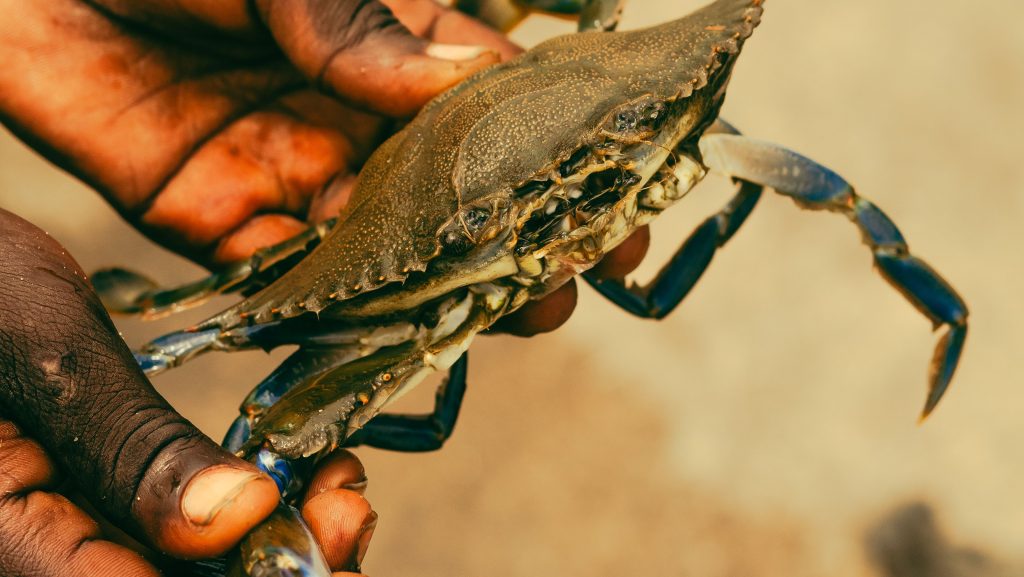
Crustaceans are a huge group of animals that belong to the family of arthropods, the same giant family that includes insects and spiders. What makes a crustacean special? Most of them have a hard outer shell, two pairs of antennae, jointed legs, and a body divided into segments.
The group includes crabs, lobsters, shrimps, prawns, krill, barnacles, copepods, woodlice and many more. Scientists have described around 70,000 species, and new ones are discovered every year.
They live almost everywhere. They fill the deepest ocean trenches, sparkling coral reefs, freshwater ponds, mangrove swamps and even damp forests on land. If the ocean is a city, crustaceans are its busiest citizens.
And for anyone interested in crustaceans & scuba diving at Kovalam, here is the exciting part: many of these creatures live in the shallow, sunlit waters of the Arabian Sea, close enough to the coast that a beginner can see them.
Secret 1: The Mantis Shrimp Has the Fastest Punch in the Ocean
Let us begin with the undisputed heavyweight champion.
The mantis shrimp is a small, brightly coloured crustacean, yet it carries a pair of club-like limbs folded beneath its body. When it strikes, those clubs accelerate at breathtaking speed, hitting prey at roughly the speed of a small-calibre bullet.
The strike is so fast that it creates tiny bubbles in the water. When those bubbles collapse, they release a second shockwave. So the prey is hit twice with a single blow.
Snails, crabs and clams with hard shells are no match. In home aquariums, mantis shrimps have been known to crack glass.
Divers love spotting them peeking out of their burrows with their stalked, swivelling eyes. Just remember the golden rule: look, admire, never touch.
Secret 2: Mantis Shrimps See Colours We Cannot Even Imagine
Humans have three types of colour-sensing cells in their eyes. The mantis shrimp has somewhere between twelve and sixteen.
That means it can detect ultraviolet light and polarised light, a kind of light invisible to us. Some species even appear to use polarised signals to communicate privately, like sending secret messages that rivals cannot read.
Each eye moves independently and has three separate zones that can judge depth by itself. Imagine having three-dimensional vision in a single eye.
Next time you are underwater, remember that a tiny animal on the reef may be seeing a far richer rainbow than you ever will.
Secret 3: The Pistol Shrimp Is a Living Sonic Weapon
If the mantis shrimp is the boxer, the pistol shrimp is the gunslinger.
This little crustacean has one oversized claw. It snaps the claw shut so violently that a jet of water shoots out and forms a bubble that collapses with a loud crack. The sound is among the loudest produced by any animal in the sea, and the collapsing bubble briefly reaches extreme temperatures.
The blast stuns small fish and shrimp, which become an easy meal.
Here is a fun surprise for scuba divers. On a quiet reef, you can often hear a faint crackling sound, like bacon frying or static on an old radio. That sound is made by thousands of pistol shrimps snapping at the same time.
When you go scuba diving at Kovalam, pause for a moment, stay still and listen. The reef is talking to you.
Secret 4: Some Shrimps Run a Cleaning Service for Fish
In the ocean, you will find something remarkable: a spa.
Cleaner shrimps set up small stations on reefs and wave their long white antennae to advertise their services. Fish queue up, open their mouths wide, and let the shrimps climb all over them, picking off parasites and dead skin.
It is a perfect partnership. The fish get cleaned. The shrimp get a free meal. Even predators that could eat a cleaner shrimp in one gulp sit patiently and let it work.
Some divers even try putting a steady hand near a cleaning station. Certain cleaner shrimps may hop on and tidy up a fingertip. It tickles, and it is a memory you will keep for life.
This kind of behaviour is exactly why crustaceans & scuba diving at Kovalam is such a perfect pairing. You cannot see this magic from the beach.
Secret 5: The Coconut Crab Is a Land Monster
Not every crustacean lives in the sea. Meet the coconut crab, the largest land-living arthropod on Earth.
An adult can measure about a metre across its legs and weigh several kilograms. Its claws are so powerful that they can crack open coconuts, and its pinch is among the strongest of any land animal.
It climbs trees, has an excellent sense of smell, and breathes air using a special organ that works like a lung. Yet young coconut crabs begin life in the sea and must return to it to grow, just like their distant cousins.
It is a wonderful reminder that crustaceans have conquered nearly every habitat, from the deep ocean to the treetops of remote islands.
Secret 6: Hermit Crabs Trade Houses in an Orderly Queue
Hermit crabs do not grow their own shells. They borrow them, and they have to move house every time they grow.
When a large empty shell appears, something amazing can happen. Crabs line up from the largest to the smallest. The biggest crab moves into the new shell, leaving its old one behind. The next crab immediately takes that one, and so on down the line, until every crab has a better home.
Scientists call this a vacancy chain. It is the same system humans use in housing markets and, in a funny way, it proves that crabs are better at neighbourly cooperation than we sometimes are.
Look for hermit crabs on the sand and rocky patches, dragging their mobile homes around like tiny snails with attitude.
Secret 7: Lobsters Do Not Age the Way We Do
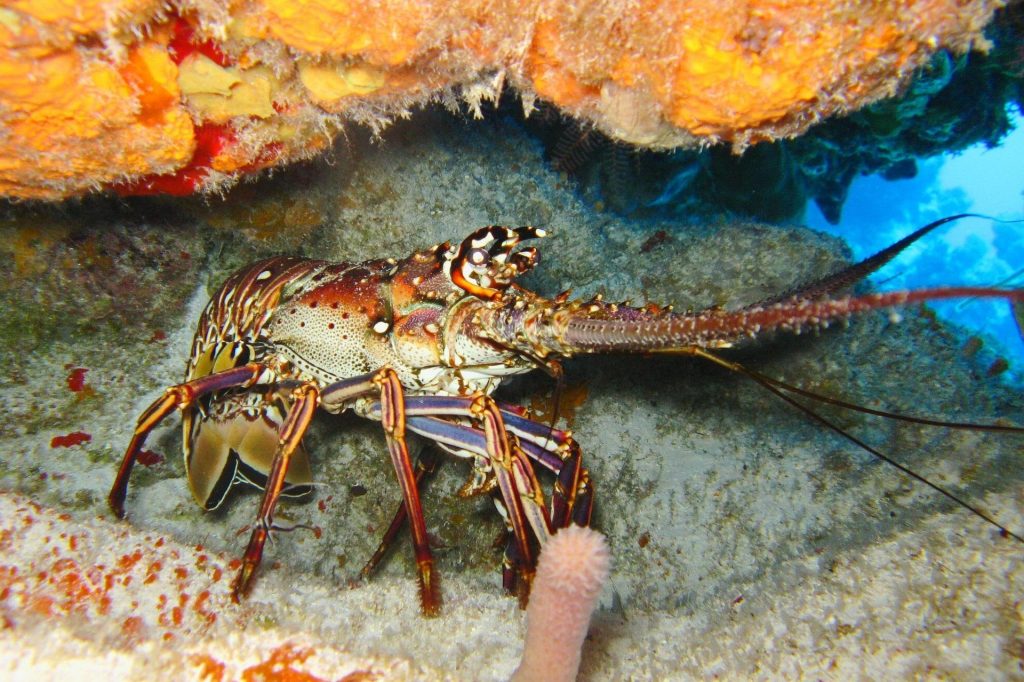
Here is a myth that fascinates people: the “immortal lobster”.
The truth is more interesting than the myth. Lobsters produce an enzyme that helps repair the tips of their chromosomes, a process linked to ageing in other animals. So they do not slow down and weaken with age as humans do.
But they are not truly immortal. As they grow, they must shed their shells again and again. Each moult takes enormous energy, and eventually a large old lobster may not survive one. Disease, predators and shell problems also take their toll.
Still, a lobster that can grow and stay strong for decades is a creature worth admiring. And somewhere in the tropical waters, its spiny cousins are hiding in the crevices of rocks, waving their long antennae at the night.
Secret 8: Crustaceans Wear Their Skeleton on the Outside
Imagine wearing armour that is also your skeleton.
A crustacean’s body is protected by a tough outer shell called an exoskeleton. It acts like armour, supports the muscles, and keeps the animal from drying out. But there is a catch. It does not stretch.
To grow, a crustacean must moult. It slowly builds a new, soft shell under the old one, then wriggles out of the old shell in a dramatic escape. For hours or days afterwards, the animal is soft, defenceless and hiding.
This is the most dangerous time of its life. It also explains why you sometimes find a perfect empty crab “body” on the sand, complete with legs and claws. It is not a dead crab. It is a discarded suit of armour, left behind by a crab that has already moved on, bigger and better.
Secret 9: Krill Are the Ocean’s Superfood
Krill look like tiny, see-through shrimps, usually only a few centimetres long. Yet together they form some of the largest gatherings of animals on the planet.
Swarms of krill can be so dense that they are visible from space. They feed on microscopic algae and are in turn eaten by fish, seabirds, seals, penguins and the biggest animals ever to have lived: the great whales.
An enormous blue whale can eat millions of krill in a single day. In other words, the world’s largest animal depends on one of its smallest neighbours.
Every time you see a whale in a documentary, remember that crustaceans made that whale possible.
Secret 10: Tiny Copepods May Be the Most Numerous Animals on Earth
If you want a truly mind-bending fact, here it is.
Copepods are minuscule crustaceans, often smaller than a grain of rice. Yet scientists believe they are among the most abundant multicellular animals on Earth. They drift in oceans, lakes and rivers in unimaginable numbers.
They are a vital link in the food chain, connecting microscopic algae with fish and other marine life. They also help move carbon from the surface to the deep sea, which makes them quiet partners in regulating our climate.
So the next time you swim in the sea, remember that you are floating in a soup of tiny crustaceans. The ocean is never empty. It is alive in every drop.
Secret 11: Barnacles Are Crustaceans Too
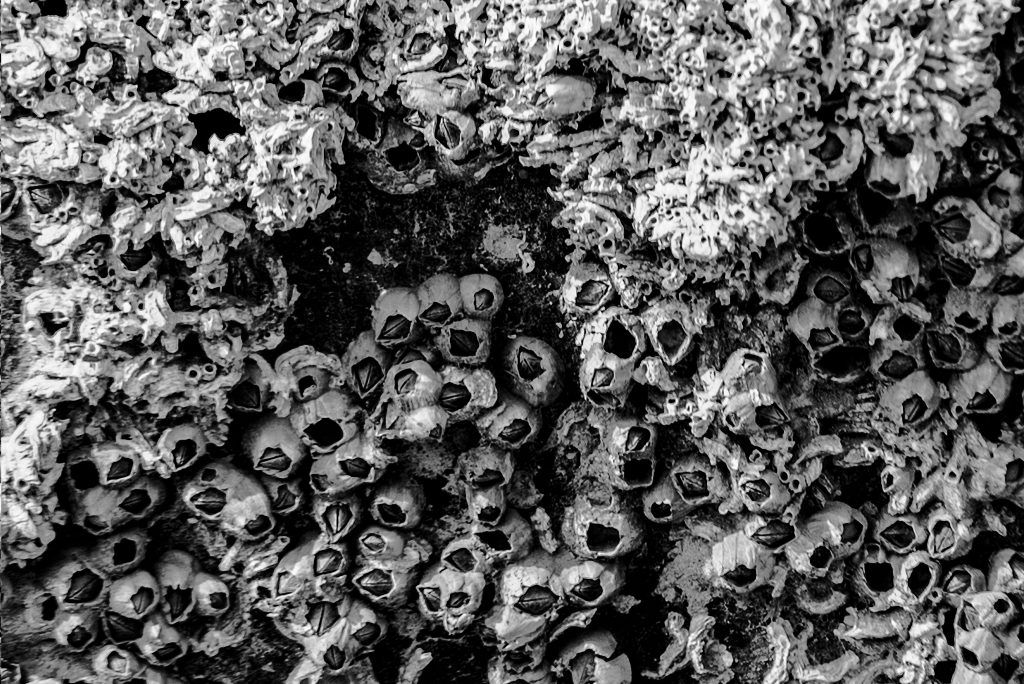
That rough, crusty layer on a rock, a boat or a pier pile? Many people assume it is a kind of shellfish like an oyster. It is not. Barnacles are crustaceans.
They begin life as tiny swimming larvae. Then each one glues its head to a surface forever, builds a protective shell of plates around itself, and kicks food into its mouth with feathery legs.
They are famous for an unusual record. Relative to body size, barnacles have the longest reproductive organ in the animal kingdom, which lets a stuck-in-place animal reach its neighbours.
It is a bizarre fact that always makes a great story at the dive centre briefing table.
Secret 12: Decorator Crabs Are Masters of Disguise
Some crabs refuse to be seen. Decorator crabs cover their shells with hooked bristles, and then attach pieces of sponge, seaweed, tiny anemones and bits of coral to themselves.
The result is a living camouflage. The crab becomes a moving garden. A predator looking for dinner sees nothing but a patch of reef.
The best part is that the crab keeps updating its outfit. If it moves to a new area, it swaps its costume to match the surroundings. Some even carry stinging creatures to protect themselves from attackers.
Spotting a decorator crab underwater is like finding a hidden object in a puzzle. Once your eyes learn the trick, you start noticing them everywhere. That is one of the joys of scuba diving: your eyes become sharper.
Secret 13: Crustaceans May Feel More Than We Once Thought
For a long time, people assumed crabs, lobsters and shrimps could not feel pain. Newer research suggests otherwise.
Studies have shown that crabs can learn to avoid places where they were shocked, and that they remember dangerous experiences. Because of this evidence, some countries have updated their animal welfare laws to recognise crustaceans as sentient beings, meaning they can feel and experience things.
This is a good reminder that the ocean is not a movie set. Every animal you meet underwater is a living individual, trying to feed, hide, mate and survive.
Good divers respect that. They keep their fins off the bottom, never chase or grab animals, and leave the reef exactly as they found it.
Secret 14: Crabs Walk Sideways for a Reason
Why do crabs walk sideways? It is not because they are confused.
Their legs are attached to the sides of the body and bend outwards, so moving sideways is the easiest and fastest direction. It also keeps their powerful claws facing outwards towards danger and lets them dash into a hole without turning around.
Some crabs, like the swimming crabs, have paddle-shaped back legs and can glide through the water with surprising grace. Ghost crabs on beaches can run at astonishing speed, and their eyes on stalks give them a nearly full view of everything around them.
If you have ever tried to catch a crab on the beach, you already know that sideways is faster than you think.
Secret 15: The Giant Isopod and the Japanese Spider Crab Prove Size Is Wild
Crustaceans come in every size, from specks you cannot see to giants that look like creatures from a science fiction movie.
The Japanese spider crab holds the record for the longest leg span of any arthropod, stretching well over three metres from claw tip to claw tip. Despite its fearsome look, it is a slow and gentle scavenger of the deep sea.
The giant isopod, a distant relative of the woodlouse you find in your garden, lives in the cold, dark deep and can grow to the size of a small dog’s head. It can survive for years without eating.
These deep-sea giants will never be seen on a recreational dive, but they remind us how much of the ocean is still unknown. Every dive, even in shallow water, is a small step in discovering that world.
Why Crustaceans Matter More Than You Think
Beyond being fascinating, crustaceans hold the ocean together.
They recycle nutrients by eating dead plants and animals. They feed whales, fish, seabirds and people. They keep algae in check, clean other animals, and build habitats for others. Without crustaceans, entire food chains would collapse.
They are also early warning signals. When crustacean populations change, it can reveal pollution, warming seas or overfishing. That is why scientists and divers who love the ocean pay close attention to these small creatures.
A healthy reef is full of scuttling, snapping, waving little legs. A silent, empty reef is a warning. Every responsible diver becomes, in a small way, a guardian of that balance.
Why Crustaceans & Scuba Diving at Kovalam Is a Perfect Match
Now comes the best part. You have read the secrets. It is time to see them in real life.
Kovalam, on the southern coast of Kerala, is known for its golden crescent beaches, swaying coconut palms and the calm, warm Arabian Sea. But beneath those waves lies a second Kovalam that most visitors never see.
The shallow water here is full of life. Rocky ledges, sandy patches and reef structures create the kind of habitat that crustaceans love. There are crevices for shrimps to hide in, sandy bottoms for crabs to burrow into, and plenty of small prey to hunt.
With a trained instructor beside you, scuba diving at Kovalam becomes a living documentary. You can drift slowly along the bottom and see how crustaceans behave in the wild, away from restaurants and tourist shops.
And you do not need to be an expert. That is the beauty of it.
Meet Bond Safari : Your Guides to the Underwater World
Every great adventure needs great guides, and that is where Bond Safari comes in.
Bond Safari in Kovalam is PADI certified, which means its training follows the standards of the world’s most recognised scuba diving organisation. Whether you are 10 years old or 60, whether you have never put your face in the water or you already love snorkelling, there is a path for you.
Here is what makes diving with Bond Safari special:
- Professional instruction. Trained and certified instructors guide you step by step, from fitting your gear to your first underwater breath.
- Small, personal attention. You are never just a number. Instructors watch your comfort, your breathing and your confidence.
- A beginner-first approach. No experience? No problem. Everything is explained clearly, practised in calm conditions and taken at your pace.
- Safety at the centre. Quality equipment, thorough briefings and careful dive planning keep the focus on fun and on being safe.
- A love of marine life. The team knows where to look, what to point out and how to help you spot those tiny, hidden creatures most people swim straight past.
If you have ever wanted to see a pistol shrimp’s reef concert or a cleaner shrimp’s spa in action, Bond Safari is the team to take you there.
Your First Dive: What Actually Happens
Many people imagine scuba diving as something only professional adventurers do. The truth is much friendlier.
A typical first experience at Bond Safari looks like this:
Step 1: The welcome and briefing. You meet your instructor, relax, and learn the basics: how the equipment works, how to breathe underwater, and the simple hand signals divers use to communicate.
Step 2: Gearing up. You are fitted with a wetsuit, mask, fins, regulator and a buoyancy vest. Your instructor checks everything.
Step 3: Practice in shallow water. Before going deeper, you practise key skills such as clearing your mask and recovering your regulator, so you feel confident.
Step 4: The descent. Slowly, calmly, you sink beneath the surface. Your ears adjust, your breathing slows, and the noise of the world melts away.
Step 5: The exploration. Now the real show begins. You float over the seabed, scanning for movement. A flick of an antenna. A tiny claw emerging from a hole. A crab sidestepping in a hurry.
The first breath underwater is something you never forget. It feels impossible, and then it feels like the most natural thing in the world.
Beyond the First Dive: Become a Certified Diver
Some people try scuba once and fall in love. If you are one of them, Bond Safari can help you go further.
The PADI Open Water Diver course is the world’s most popular scuba certification. Once you complete it, you can dive with a buddy anywhere in the world, to the depth limits set for that level. From there you can continue to advanced courses, specialty training and even professional pathways.
Why does this matter for crustacean lovers? Because the more skilled you become, the more you notice. Better buoyancy control lets you hover motionless without disturbing the reef. Calm breathing lets you stay longer. Patience lets you watch a shrimp for ten minutes and discover what it is actually doing.
The best wildlife encounters do not happen to the fastest divers. They happen to the calmest ones.
Tips for Spotting Crustaceans Underwater
Want to turn into a crustacean detective? Try these simple tricks on your next dive.
1. Slow down. Most crustaceans are small and shy. The slower you move, the more you will see.
2. Look in the cracks. Shrimps, lobsters and crabs love crevices, holes and overhangs. Scan the shadows.
3. Watch for movement. Tiny waving antennae or a sudden scuttle often give away a hidden animal.
4. Listen. The crackling background sound of the reef is the signature of pistol shrimps.
5. Follow the clues. A pile of sand outside a hole might be the doorstep of a burrowing crustacean.
6. Ask your instructor. Guides know the favourite hiding places and can help you find them.
7. Bring patience. Some of the best sightings are rewards for those who simply wait quietly.
These tips work for every level, from a first-time diver to someone with hundreds of dives.
Dive Like a Hero of the Reef: Responsible Diving Rules
The ocean is a guest house, and divers are the guests. The rules are simple.
- Never touch, chase or grab marine animals.
- Keep your fins well above the seabed to avoid stirring up sand or crushing small creatures.
- Never take shells, corals or animals home.
- Do not feed marine life.
- Take only photographs and leave only bubbles.
- Follow your instructor’s guidance at all times.
These habits protect the crustaceans you came to see, and they ensure that the next diver, and the next generation, gets to enjoy the same wonders.
Best Time and Practical Tips for Scuba Diving at Kovalam
A few simple things will make your adventure smoother.
Best season. In general, the calmer, clearer months run from around October through to May, when the sea is usually gentler. The monsoon months can bring rougher water and lower visibility. Ask the Bond Safari team about current conditions when you plan your trip.
Fitness and health. You do not need to be an athlete, but you should be comfortable in water and in reasonable health. You will complete a simple medical questionnaire before diving. Certain conditions may require a doctor’s approval.
Before you dive. Eat a light meal, drink water and avoid alcohol the night before.
After you dive. Avoid flying too soon after diving. Divers are advised to wait before boarding a flight, so plan your schedule accordingly.
What to bring. Swimwear, a towel, sun protection and a sense of wonder. Bond Safari provides the dive equipment you need for introductory experiences.
Mindset. Come curious and relaxed. The ocean rewards those who arrive with open eyes.
Frequently Asked Questions
Is scuba diving at Kovalam safe for beginners?
Yes, when done with certified professionals. Beginners start with a thorough briefing, practise basic skills in shallow water, and dive with an instructor beside them at all times.
Do I need to know how to swim?
Basic comfort in water is important. Your instructor will explain what is required for your chosen programme, so ask at the time of booking.
What is the minimum age?
Introductory scuba experiences and junior certification programmes are generally available from the age of 10, with certain conditions. Confirm the details with Bond Safari before you book.
Will I really see crustaceans?
Crustaceans are among the most common animals on any reef, so there is a good chance of spotting crabs and shrimps with a guide who knows where to look. Wildlife is never guaranteed, but patience and sharp eyes make a big difference.
Can I take photos underwater?
Many divers love capturing their experience. Ask the team about camera options and good photography habits so you do not disturb marine life.
Is a certification needed for the first dive?
No. An introductory dive lets you experience scuba with an instructor, even if you have never tried it before.
Final Thoughts: The Ocean Is Calling, and It Has Claws
Crustaceans are proof that the greatest wonders do not have to be big. A shrimp that sings. A crab that wears a garden. A tiny shrimp that cleans giant fish. A creature that can see colours we have no names for.
They have survived mass extinctions, built food chains, and filled every corner of the planet. And many of them are waiting, quietly, just a few metres below the warm waters off Kovalam.
Reading about crustaceans & scuba diving at Kovalam is a great start. But facts are only the first step. The real thrill is the moment you look through your mask, see a pair of tiny eyes looking back at you, and realise you are a visitor in a world that has been thriving for hundreds of millions of years.
So pack your sense of adventure. Take that first breath. Let Bond Safari show you the ocean that most people never see.
Book your crustaceans & scuba diving at Kovalam experience with Bond Safari today, and discover the secrets of the sea for yourself.