
If you have ever watched a dolphin leap out of the waves and wondered what is really going on behind those bright, curious eyes, you are about to find out. These fun facts about dolphins will take you deep into the biology, intelligence, language, and family life of one of the most beloved animals on the planet. And because reading about dolphins is only half the fun, we will also show you how to get into the water yourself — with a scuba diving adventure at Bond Safari in Kovalam, where you can explore the underwater world for real.
Dolphins have fascinated sailors, scientists, and beachgoers for thousands of years, and for good reason. They are playful, social, astonishingly intelligent, and built for a life underwater that still puzzles researchers today. Below, we have gathered the most jaw-dropping fun facts about dolphins you will find anywhere online, organized into easy sections so you can jump straight to what interests you most — from their genius-level brains to their supersonic hearing, right through to how you can meet the ocean up close on Kerala’s coast.
Grab a cup of coffee, settle in, and get ready to fall in love with dolphins all over again. Whether you are a lifelong ocean lover or someone who just stumbled onto this page searching for fun facts about dolphins, there is something here for you — and a real underwater adventure waiting at the end of it.
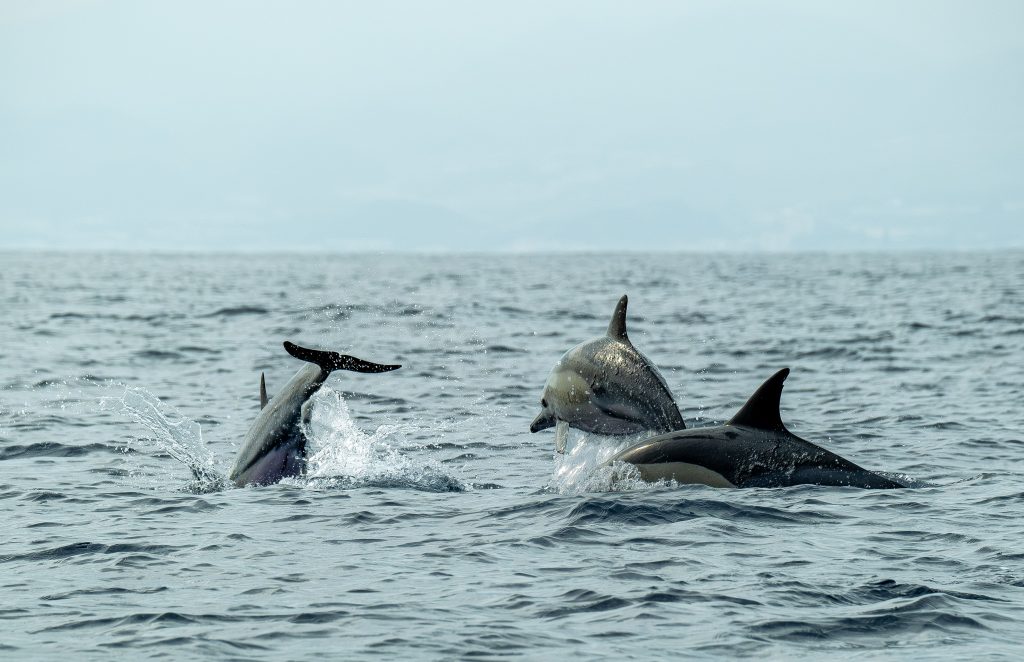
Why Fun Facts About Dolphins Fascinate the World
Few animals capture human imagination quite like dolphins. Part of it is their permanent smile, part of it is their acrobatics, and part of it is the eerie sense that they understand more about us than we understand about them. Marine biologists describe dolphins as a “sentinel species,” meaning their health reflects the overall health of the ocean ecosystem around them. When dolphin populations thrive, it usually means the surrounding marine environment is thriving too.
There are roughly 40 recognized species of dolphins living in oceans, seas, and even a few rivers around the globe. They range from the tiny Maui’s dolphin, barely 1.7 metres long, all the way up to the orca — technically the largest member of the dolphin family — which can stretch past 9 metres. That single fact alone surprises most people: the killer whale you have seen in documentaries is not a whale at all. It is the biggest dolphin in the ocean.
This is exactly the kind of detail that makes learning fun facts about dolphins so addictive. Just when you think you know everything about these animals, another layer of complexity reveals itself. Let’s start with the trait that scientists find most remarkable of all: dolphin intelligence.
Fun Facts About Dolphins: Their Incredible Brainpower
1. Dolphins Have One of the Highest Brain-to-Body Ratios in the Animal Kingdom
Among all the fun facts about dolphins researchers love to share, this is usually the opening line. A dolphin’s brain-to-body mass ratio is second only to humans, and it comfortably outranks every other species on Earth, including chimpanzees. This unusually large brain is not just for show — it is packed with a highly developed neocortex, the region associated with problem-solving, emotional processing, and social awareness.
2. Dolphins Recognize Themselves in Mirrors
Self-recognition is considered a benchmark of advanced cognition, and dolphins pass the mirror test with ease. When researchers mark a dolphin’s body with a harmless spot and place it in front of a mirror, the dolphin will twist and turn to examine the mark on itself, proving it understands the reflection is its own body rather than another animal. Remarkably, dolphins tend to demonstrate this self-awareness earlier in life than human toddlers do.
3. Dolphins Use Tools
Bottlenose dolphins in Shark Bay, Australia, have been observed breaking off marine sponges and wearing them over their snouts like protective gloves while foraging along the sharp, rocky seafloor. This behaviour, nicknamed “sponging,” is taught by mothers to their calves, and it is one of the clearest examples of culture — knowledge passed down through generations — ever documented outside of humans and a handful of primates.
4. Dolphins Can Solve Problems and Plan Ahead
Captive dolphins have repeatedly demonstrated the ability to think several steps ahead, whether it is figuring out how to retrieve a treat from a puzzle feeder or cooperating with a trainer on a multi-step task. In the wild, entire pods coordinate elaborate hunting strategies that require timing, communication, and division of labour — behaviour that demands real forward planning, not just instinct.
5. Dolphins Sleep With Half Their Brain Awake
Because dolphins are conscious breathers — meaning they must actively choose to surface for air rather than breathing automatically the way humans do — they cannot afford to fall into a full, deep sleep. Instead, they rest one hemisphere of the brain at a time while the other half stays alert enough to keep swimming, watch for predators, and remember to breathe. This is known as unihemispheric slow-wave sleep, and it is one of the most astonishing adaptations in the animal kingdom. If you only remember one entry from this list of fun facts about dolphins, this half-awake sleeping trick is a strong contender.
Fun Facts About Dolphins: Communication and Language
Dolphins are famously chatty, and scientists are only beginning to decode what all that chatter means — which makes this next batch of fun facts about dolphins some of the most exciting in modern marine research.
6. Every Dolphin Has Its Own “Name”
Perhaps one of the most poetic fun facts about dolphins on this list: each bottlenose dolphin develops its own unique signature whistle within the first few months of life, and this whistle functions almost exactly like a name. Dolphins use these signature whistles to identify themselves to others and to call out to specific pod members across long distances. Mothers and calves have even been recorded calling each other’s signature whistles when separated, much like a parent calling a child’s name in a crowded room.
7. Dolphins “Talk” Through Their Blowhole
Unlike humans, who produce sound through vocal cords in the throat, dolphins generate their whistles, clicks, and squeals using structures near their blowhole at the top of their head. Air is pushed through a complex system of tissues, allowing dolphins to produce multiple sounds simultaneously — something no land mammal can do.
8. Dolphin Vocabulary May Be More Complex Than We Thought
Researchers using underwater recorders and machine-learning algorithms have identified dozens of distinct click and whistle patterns that appear to carry different meanings, from alarm calls to social greetings. While we are still far from a full “dolphin dictionary,” the evidence increasingly suggests their communication system is layered and context-dependent, rather than a simple set of reflexive sounds.
9. Dolphins Can Learn Human-Made “Words”
In controlled studies, dolphins have shown the ability to understand basic syntax, correctly responding to instructions where word order changed the meaning of a sentence made of hand signals or underwater symbols. This puts dolphin comprehension in a similar league to some of the smartest trained primates.
Fun Facts About Dolphins: Echolocation — Nature’s Sonar
If there is one system that makes dolphins feel almost like science fiction creatures, it is echolocation — and it easily produces some of the most mind-blowing fun facts about dolphins you will ever come across.
10. Dolphins “See” With Sound
Dolphins possess a biological sonar system so advanced it outperforms most man-made sonar technology. By emitting rapid clicking sounds — sometimes more than 1,000 clicks per second — and listening for the echoes that bounce back, a dolphin can build a detailed mental picture of its surroundings, even in pitch-black or murky water. The returning echo tells the dolphin the shape, size, speed, density, and even the internal structure of an object, almost like an ultrasound scan.
11. Echolocation Works Like an Underwater X-Ray
Because sound travels differently through solid tissue than it does through water, a dolphin using echolocation on a fellow animal can actually detect internal features, such as whether another dolphin is pregnant, or whether a fish has a swim bladder full of air. This level of sensory detail goes far beyond anything human eyes could achieve, even with perfect visibility.
12. Dolphins Politely Take Turns With Their Sonar
Here is a small but charming addition to our list of fun facts about dolphins: when two dolphins are echolocating near each other, one will typically pause its clicking while the other’s sound waves are active, then resume once the other has finished. Scientists believe this prevents the dolphins’ sonar signals from interfering with one another, almost like two people taking turns speaking instead of talking over each other.
Fun Facts About Dolphins: Social Life and Family Bonds
13. Dolphins Live in Complex, Ever-Changing Social Groups
Dolphins live in groups called pods, which typically range from a handful of individuals to several dozen. In open ocean environments, multiple pods sometimes merge into “superpods” that can include over a thousand dolphins hunting, travelling, and socializing together. Within these groups, dolphins form close friendships, shifting alliances, and long-term bonds that researchers have tracked across decades in places like Shark Bay, Western Australia.
14. Dolphins Show Personality Traits Similar to Humans
Long-term behavioural studies have found that individual dolphins display consistent personality traits — some are bold and outgoing, others are shy and cautious, and some are natural leaders within their pod. This range of temperament mirrors the personality spectrum seen in humans and other highly social mammals.
15. Dolphins Help Injured or Sick Pod Members
Dolphins have been observed supporting injured or ill companions at the surface so they can breathe, a behaviour that requires real cooperation and, many scientists argue, genuine empathy. There are also well-documented accounts of wild dolphins protecting swimmers from shark attacks by circling and even physically shielding the person until help arrived — one of the most heart-warming fun facts about dolphins to come out of decades of marine research.
Fun Facts About Dolphins: Physical Abilities and Speed
Beyond the brainpower, dolphins are simply extraordinary athletes, and this next set of fun facts about dolphins proves just how well built they are for life in the open ocean.
Dolphins can reach swimming speeds of up to 30 kilometres per hour in short bursts, powered by a strong, flexible tail fluke that moves up and down rather than side to side like a fish’s tail. Their streamlined, torpedo-shaped bodies reduce drag, letting them glide through water with remarkable efficiency.
Their skin is another marvel. Dolphins shed and regenerate their outer skin layer roughly every two hours, which keeps their bodies smooth and helps reduce friction while swimming at speed. This rapid turnover also helps heal wounds quickly; dolphins possess extraordinary healing abilities, often recovering from deep injuries — including shark bites — without the infections that would be life-threatening to most other animals.
Dolphins can dive to depths of around 250 to 300 metres depending on the species, holding their breath for periods that can exceed ten minutes in some cases. They manage this thanks to a highly efficient oxygen storage system in their blood and muscles, along with a slowed heart rate while submerged — a physiological trick called the “dive reflex.”
And then there is their vision. Dolphins have excellent eyesight both above and below the waterline, with each eye able to move independently, giving them an almost panoramic field of view to spot predators or prey approaching from multiple directions at once.
Fun Facts About Dolphins: Hunting Strategies
Dolphin hunting techniques are as varied as the environments they live in, and some of them look more like coordinated military exercises than animal behaviour — another reminder that fun facts about dolphins rarely stay predictable for long.
In several coastal regions, pods of dolphins have been recorded working together to create a wall of mud along the sea floor, herding fish into a tight circle where they are easy to catch. This “mud-ring feeding” strategy requires precise timing and cooperation between multiple dolphins, each playing a specific role in the hunt.
Elsewhere, dolphins use a technique called “fish whacking,” where they slap a fish with their powerful tail fluke hard enough to stun or launch it out of the water, making it easy prey once it lands back in reach. Some pods have also been observed herding schools of fish into tight “bait balls” near the surface, taking turns diving through the compacted school to feed while the rest of the group maintains the circle.
Certain dolphin populations have even learned to follow fishing trawlers, taking advantage of the disturbed fish stirred up by the nets — a clever adaptation to human activity that shows just how quickly these animals adjust their hunting strategies to new opportunities.
Fun Facts About Dolphins: Different Species Around the World
When people picture a dolphin, they usually imagine the bottlenose dolphin, the most recognizable and widely studied species thanks to its role in aquariums, films, and research programs. But the dolphin family is far more diverse than that single image suggests, and exploring it opens up a whole new category of fun facts about dolphins.
The orca, or killer whale, is technically the largest dolphin species, capable of growing beyond 9 metres and weighing several tonnes. Despite its fearsome nickname, orcas are highly social, living in tight-knit matriarchal family groups called pods that can stay together for life.
On the opposite end of the size spectrum, the Maui’s dolphin — found only off the coast of New Zealand — is one of the smallest and rarest dolphins on Earth, with a total population numbering in the dozens rather than thousands, making it critically endangered.
The Amazon river dolphin, also called the boto, is one of the few freshwater dolphin species, living in the murky rivers of South America. It has a distinctive pink hue that becomes more vivid as the animal ages, and unlike most ocean-dwelling dolphins, it has a flexible neck that lets it turn its head almost independently of its body — useful for navigating flooded forests during the rainy season.
Off the coast of India, including the waters around Kerala, spinner dolphins and bottlenose dolphins are regularly spotted by fishermen and coastal divers, occasionally putting on spectacular aerial displays that give the spinner dolphin its name — a series of rapid mid-air spins that can rotate the animal several times before it re-enters the water.
Fun Facts About Dolphins: Conservation and Why They Matter
Not every chapter in the dolphin story is a happy one, and understanding the challenges dolphins face is just as important as celebrating their abilities — no list of fun facts about dolphins is complete without it.
Several dolphin species are currently listed as vulnerable, endangered, or critically endangered, largely due to bycatch in fishing nets, habitat loss, pollution, and declining fish stocks caused by overfishing. Because dolphins sit near the top of the marine food chain, their population health serves as an early warning system for problems affecting the broader ocean ecosystem — including the same reefs and coastlines that scuba divers and snorkelers visit every year.
Marine conservation organizations around the world track dolphin populations closely, using them as indicator species to measure ocean health. According to marine researchers, protecting dolphin habitats often means protecting coral reefs, seagrass beds, and fish nurseries at the same time, which is why dolphin conservation efforts tend to benefit the entire marine environment rather than a single species. You can read more detailed research on dolphin behaviour and conservation from the <a href=”https://blog.padi.com/10-fascinating-dolphin-facts/” target=”_blank” rel=”dofollow”>PADI fun facts about dolphins guide</a>, one of the most trusted diving organizations in the world.
This is also part of why responsible, well-regulated scuba diving and marine tourism matter. Operators who follow proper diving protocols and marine safety standards help protect the very underwater world that makes dolphin sightings and reef diving possible in the first place. The more people learn genuine fun facts about dolphins instead of myths, the more support conservation programs tend to receive — which is ultimately good news for every diver hoping to explore the underwater world responsibly for years to come.
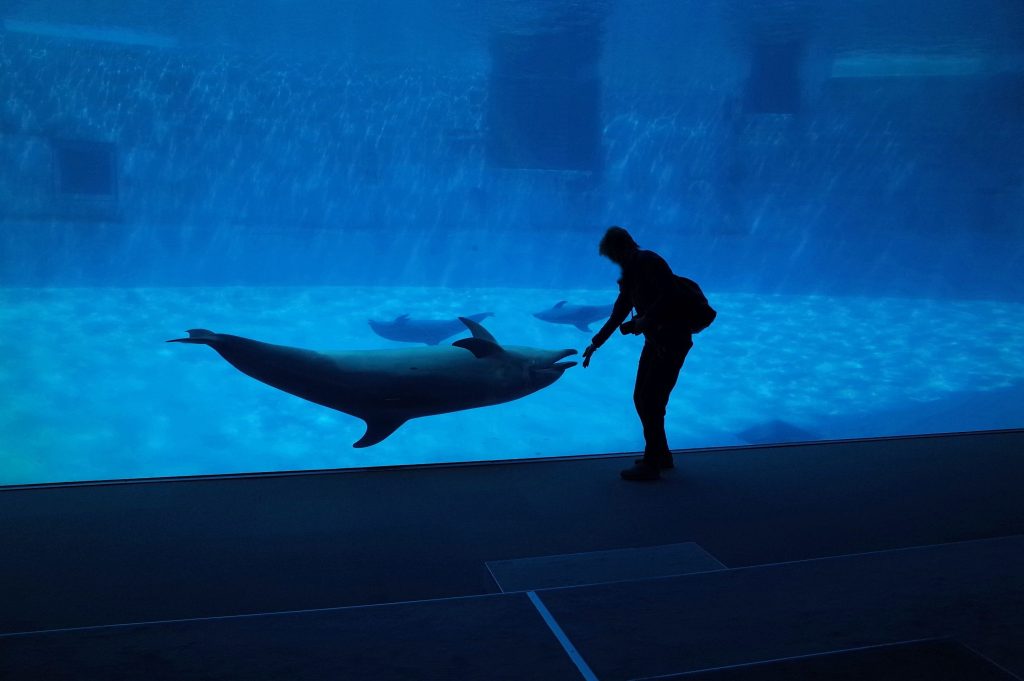
Fun Facts About Dolphins: Diet, Lifespan, and Reproduction
This next stretch of fun facts about dolphins moves from behaviour into biology. Dolphins are strict carnivores, feeding mainly on fish, squid, and crustaceans. A single adult dolphin can eat somewhere between 4 and 30 percent of its body weight in food every day, depending on the species, water temperature, and activity level. Interestingly, dolphins swallow their prey whole rather than chewing it, since their conical teeth are built for gripping slippery fish, not grinding food. To make up for this, dolphins actually have two stomach chambers — one that briefly stores food and another that handles digestion, similar in principle to the multi-chamber stomachs seen in some land mammals.
Another one of the more surprising fun facts about dolphins is that they never drink seawater directly. Instead, dolphins get almost all the moisture they need from the fish they eat, along with a small amount of metabolic water produced internally as their bodies break down food. Drinking straight seawater would dehydrate them faster than it hydrates them, exactly the opposite of what their bodies need.
In terms of lifespan, most bottlenose dolphins live between 20 and 40 years in the wild, though some individuals — particularly females in stable, well-studied pods — have been tracked living into their 50s or even 60s. Calves are born after a gestation period of roughly 12 months, and they typically stay close to their mothers for several years, nursing and learning essential survival skills like hunting techniques, social signals, and, in some populations, tool use such as sponge-foraging.
Mother-calf bonds among dolphins are among the strongest in the animal kingdom. Calves are rarely more than a body length away from their mothers during the first months of life, and mothers have been observed supporting sick or deceased calves at the surface for days, a behaviour researchers interpret as a visible expression of grief.
Fun Facts About Dolphins From Mythology and Culture
Long before marine biologists began studying fun facts about dolphins scientifically, ancient cultures were already writing about these animals with awe and reverence. In Greek mythology, dolphins were considered sacred to Poseidon and Apollo, and sailors regarded a dolphin escort alongside their ship as a sign of good luck and safe passage. The Greek word “delphis,” from which the English word “dolphin” is derived, is believed to be linked to the word for “womb,” a nod to the ancient recognition that dolphins, unlike fish, give birth to live young.
Along India’s coastline, including the waters near Kerala, fishing communities have long regarded dolphins as good omens, occasionally following pods to locate schools of fish beneath the surface. Even today, spotting a pod of dolphins from a boat near Kovalam is considered a memorable, almost lucky moment by local sailors and tourists alike.
Modern popular culture has only deepened this fascination, with dolphins appearing in films, marine park shows, and countless documentaries exploring their intelligence and playful nature. Yet nothing quite compares to encountering the real underwater world yourself — which brings us back to the ocean right here in Kerala.
From Reading Fun Facts About Dolphins to Living Them: Scuba Diving at Bond Safari Kovalam
By now you have absorbed some genuinely mind-blowing fun facts about dolphins — their sonar, their friendships, their names, their family bonds. But there is only so much you can learn from a screen. The real magic happens when you put on a mask, sink beneath the surface, and explore the underwater world with your own eyes.
That experience is exactly what Bond Safari in Kovalam offers, right on the coast of Kerala. Kovalam Beach in Thiruvananthapuram is one of the few places along India’s coastline where recreational scuba diving is both accessible and beginner-friendly, and Bond Safari has built its reputation as a PADI-certified scuba diving agency offering safe, guided dives into the Arabian Sea.
What to Expect When You Dive With Bond Safari
You do not need any prior diving experience or even strong swimming skills to try scuba diving at Bond Safari. Every guest is paired with a professional, PADI-trained diving instructor who does the actual swimming, gently guiding you by the weight belt while you relax and take in the underwater scenery. Before entering the water, the team fits you with a full diving suit, a mask, an air cylinder carrying compressed air (not pure oxygen, contrary to popular belief), and a buoyancy control jacket to keep you comfortably stable underwater.
Once you descend beneath the waves, the ocean floor around Kovalam reveals a world that feels almost otherworldly. Fine sand glitters like sugar granules scattered across the seabed, colourful molluscs and shells dot the underwater dunes, and schools of shimmering fish move in perfect synchronized formations around you. Divers regularly describe the scene as something out of a fairy tale — a calm, sunlit underwater landscape that feels worlds away from the beach crowds just a few metres above.
Why Kovalam Is the Perfect Place to Start Scuba Diving
Kovalam’s warm, relatively calm Arabian Sea waters make it an ideal training ground for first-time divers. Unlike open-ocean diving sites that demand advanced certification, Bond Safari’s beginner sessions are designed specifically for curious travellers who simply want to explore the underwater world without committing to a lengthy certification course first. According to the team at Bond Safari, roughly 80 percent of guests who try their introductory diving experience go on to consider full scuba certification afterward — a testament to how quickly people fall in love with the sport after just one dive.
Bond Safari also offers snorkelling for those who prefer to stay closer to the surface, along with boat excursions, freediving sessions, and other water-based activities, all supervised by a professional and safety-focused team. Whether you are travelling solo, with friends, or with family, there is an underwater experience suited to your comfort level.
Best Time to Visit Kovalam for Scuba Diving
The diving season around Kovalam generally runs from October through May, when the Arabian Sea is calmer and underwater visibility is at its best. During these months, sea conditions are more predictable, making it easier for Bond Safari’s instructors to plan safe, enjoyable dives for both beginners and more experienced divers. Mornings tend to offer the clearest water, so early bookings are often recommended if you want the best possible view of the reef and fish life below.
What Divers Say About Exploring the Underwater World
Guests who try scuba diving at Bond Safari frequently describe it as one of the most memorable experiences of their trip to Kerala, often ranking it above more traditional tourist activities. Many first-timers arrive nervous about breathing underwater and leave asking when they can book their next dive. That reaction is fairly common in the diving world — once people get past the initial hesitation and actually explore the underwater world firsthand, the experience tends to speak for itself far better than any list of fun facts about dolphins or brochure ever could.
Because the Bond Safari team keeps groups small and closely supervised, even anxious first-time divers are able to relax and enjoy the dive at their own pace, with instructors staying close throughout the entire underwater session.
Booking Your Underwater Adventure
If reading these fun facts about dolphins has left you dreaming about the ocean, there is no better way to turn that curiosity into a real memory than booking a scuba diving session at Bond Safari Kovalam. While dolphin sightings in open water can never be guaranteed on any single dive, exploring the same rich marine environment that dolphins call home — with its vibrant fish life, sandy seabeds, and clear coastal waters — is an unforgettable way to feel closer to the ocean’s most fascinating residents.
Ready to explore the underwater world for yourself? Book your scuba diving session with Bond Safari Kovalam today and trade the screen for the sea. You can also browse our full range of diving packages and pricing or check out what past divers are saying about their first-time scuba diving experience in Kovalam.
Frequently Asked Fun Facts About Dolphins and Diving Questions
Still have questions after all these fun facts about dolphins? Here are quick answers to what visitors usually ask before booking a dive.
Do dolphins live in the waters near Kovalam? Yes, spinner dolphins and bottlenose dolphins are known to inhabit waters along the Kerala coastline, and boat trips and early-morning excursions occasionally offer sightings, although wild sightings are never guaranteed on any given day.
Is scuba diving safe for beginners with no experience? Yes. Introductory scuba diving sessions at Bond Safari are designed for complete beginners, with a certified instructor guiding you throughout the entire dive so you can safely explore the underwater world without prior training.
How deep do you go during a beginner scuba dive? Beginner sessions typically stay in shallow, controlled depths suited for first-time divers, allowing you to safely experience marine life without the pressure risks associated with deep diving.
Do I need to know how to swim to try scuba diving? Not necessarily. Because your instructor does the swimming for you during introductory sessions, even non-swimmers can safely enjoy the experience under professional supervision.
Are there other fun facts about dolphins I should know before diving? Absolutely. Beyond the fun facts about dolphins covered in this guide, it helps to know that dolphins are most active during early morning and late afternoon hours, which is also when many boat operators along the Kerala coast schedule their dolphin-watching trips. Pairing an early boat excursion with an afternoon scuba session at Bond Safari is a popular way for visitors to make the most of a single day exploring the underwater world around Kovalam.
Final Thoughts on Fun Facts About Dolphins and Ocean Adventures
Dolphins remind us just how much intelligence, emotion, and complexity exists beneath the surface of the ocean — literally. From their genius-level brains and personal “names,” to their sonar vision and tight-knit family bonds, these fun facts about dolphins only scratch the surface of what makes dolphins one of the most remarkable species on Earth.
But facts on a page can only take you so far. The ocean is still out there, waiting, full of colour, movement, and life you can only truly understand by experiencing it yourself. So the next time you find yourself daydreaming about dolphins, spinner splashes, and sunlit seabeds, remember that Kovalam is only a short trip away — and Bond Safari is ready to help you explore the underwater world in person.
Book your scuba diving adventure at Bond Safari Kovalam today, and turn everything you just read about fun facts about dolphins into a memory you will never forget.